
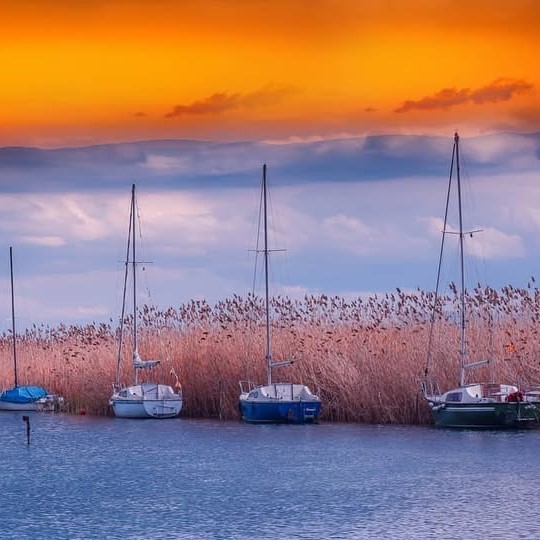
Struga, North Macedonia: The River Town Where Lake Ohrid Finds Its Voice
Struga has a softer rhythm than nearby Ohrid, and that is exactly why it works so well. You arrive expecting a lakeside town, then quickly realize that Struga tells a different story. Here, Lake Ohrid narrows, gathers itself, and flows out as the Black Drim. That shift from still lake to moving river shapes everything around you. It shapes the town plan, the evening walks, the café life, and even the mood. Struga feels open, level, and easy to read. It invites slow travel, easy conversation, and long walks along the water rather than steep climbs and dense sightseeing.
That setting gives Struga a clear identity. The town lies on the north shore of Lake Ohrid, spreads across both banks of the Black Drim, and sits in a valley basin about 695 meters above sea level. It is also close to Ohrid, with official tourism material placing it about 15 kilometers away, which makes it an easy add-on for travelers who want a quieter counterpoint to the old-town intensity of its famous neighbor. In practical terms, Struga works as a half-day stop, a full-day outing, or a short base of its own. In emotional terms, it gives you something different from Ohrid. It gives you room.
A Town Shaped by Fishing, Trade, and Poetry
Struga’s story reaches back far before its current resort identity. Local history sources describe it as an ancient settlement with traces that go back to the Neolithic period, while broader historical summaries identify its ancient name as Enhalon or Enchalon, a name linked to eel. That link matters because it points straight to the water and to fishing, which helped shape local life for centuries. Even the old name carries a practical memory of the lake and river ecosystem that sustained the town.
Later centuries gave Struga a stronger role as a market and transit town. Historical summaries describe it during Ottoman times as a place known for fishery, wheat shipments, fertile plains, and trade. You can still feel that older commercial logic in the flat layout, the riverside crossings, and the bazaar atmosphere that lingers near the center. Struga never grew into a monumental capital or fortified hill town. It grew as a working settlement on water, where movement, exchange, and seasonal life mattered. That background still gives the town its grounded character today.
Then poetry changed Struga’s public image in a lasting way. The Struga Poetry Evenings festival began in 1961 and became an international festival by 1966, when the Golden Wreath award was established. That literary chapter turned Struga into one of the region’s key cultural names and gave the town a second identity beyond lake tourism. It is why Struga is still widely called the City of Poetry. Here, culture does not feel pasted onto the place. It grows naturally from the river, the bridge, the public spaces, and the town’s instinct for gathering.
The Riverfront Korzo and the Bridge of Poetry
The best way to understand Struga is to walk beside the Black Drim. The riverfront korzo forms the town’s social spine. Cafés line the water, small bridges break the view into short scenes, and people keep moving through the center at an easy pace. In the evening, this part of town becomes a stage for daily life. Locals come out to stroll, talk, sit by the quay, and watch the light change over the river. Struga tourism material puts the Drim quay at the center of the visitor experience, and that feels exactly right. The town explains itself best from the riverbank.
At the heart of this walk stands the Bridge of Poetry. Tourism material for Struga describes it as the place where the official opening of the poetry festival takes place each August, and related festival sources connect the bridge with readings and award ceremonies. That makes the bridge more than a crossing. It is a civic symbol, a literary stage, and a reminder that Struga values public culture in a direct and visible way. Even outside festival week, the name fits. The bridge links the two sides of the river and, in a sense, links the town’s ordinary daily life with its international cultural identity.
The riverfront also carries one of Struga’s liveliest local habits. Current tourism material says visitors can sit at a quay café and watch locals jump into the Drim, and travel coverage describes this as a real Struga tradition. That image captures the town perfectly. Struga does not hold its water at a distance. It lives with it. In summer, the river becomes part promenade, part playground, part cooling-off ritual. When locals “walk the river” at night, they are doing more than taking a stroll. They are taking part in the town’s shared public rhythm.
Saint George Church and the Old Spiritual Core
Struga’s church of Saint George adds depth and seriousness to the center. Local heritage material highlights its exceptional wood-carved iconostasis, completed in 1850, and notes that the church received its full fresco decoration in 1874. Those details matter because they show how rich the interior artistic tradition is, even if the town itself first presents as relaxed and informal. Saint George anchors Struga in the Orthodox artistic world of the wider Ohrid region, where carving, icon painting, and wall painting carry deep local meaning.
For visitors, Saint George works best as a pause in the middle of the walk rather than as an isolated monument. You move from the river, the shops, and the cafés into a quieter space where the town’s religious and artistic memory comes into focus. That shift tells you something important about Struga. Beneath the summer ease and resort feel, there is a long spiritual and cultural tradition that still shapes the town’s identity. This is one reason Struga feels richer than its first impression suggests.
Lakefront Time, Women’s Beach, and Easy Boat Moments
Struga also works very well as a place to do very little, provided you do it near the water. Official tourism guidance points visitors toward city beaches, lakefront swimming, and small boat hire or gentle shoreline cruises. That makes sense because Struga’s appeal sits as much in atmosphere as in landmarks. You do not need a packed checklist here. A slow walk, a swim, a short boat outing, and an unrushed meal can already fill the day well.
Women’s Beach remains one of the familiar lakefront names in town and functions as part of Struga’s easy-access shoreline culture. Travel references to Struga also note other city beaches around the river mouth and the lakefront, which helps explain why the town feels so open in summer. The water is never far away. From the center, you can shift from the river to the lake in minutes, and that closeness keeps Struga light on its feet. It is a town where people move between swimming, coffee, walking, and conversation without much planning.
What Struga Tastes Like and What It Sounds Like at Dusk
Food in Struga follows the water and the seasons. Historical accounts of the town mention eel and trout, and North Macedonia Timeless still presents eel and trout à la Struga among the local culinary markers. That continuity says a lot. Struga’s kitchen grew from the lake, the river, and the plain around them, so simple fish dishes still feel right here. A grilled trout by the water fits the town better than anything complicated. It connects the plate to the place in a direct way.
The shopping streets add another layer through craft. Official tourism copy for Struga points to gift shops with silver filigree, hand-painted terracotta, and embroidered textiles. Filigree matters in particular because it ties Struga to the wider craft tradition of the Ohrid region. A small jewelry shop or craft stop can therefore become more than a souvenir errand. It becomes a glimpse into local skill, material culture, and the kind of handmade detail that still survives in the town center.
As evening falls, Struga becomes especially enjoyable. The café strip along the river and near the shore catches the last light, and the town settles into its best social form. You hear glasses, water, conversation, and music from nearby venues without feeling pushed by crowds. That atmosphere is one of Struga’s real strengths. It feels active, though it rarely feels hard-edged. The town knows how to fill public space without losing its calm.
A Mixed Cultural Setting with a Strong Local Character
Struga’s cultural identity comes from overlap. Census material for the municipality records Albanian and Macedonian communities in large numbers, along with Turkish, Vlach, Roma, and other groups. In the town itself and in the wider municipality, that mix shapes language, food, family life, and public culture. So when people describe Struga as carrying Macedonian, Albanian, and Vlach heritage, they are naming a visible reality rather than a slogan. The town feels mixed because it is mixed.
That diversity also helps explain why Struga feels socially open and culturally layered. You see it in the names of shops, in the food choices, in the rhythm of the promenade, and in the way local culture resists a single label. Poetry also fits this setting. A festival built around language, translation, and shared public space feels at home in a town shaped by more than one tradition.
Easy Itineraries from Ohrid to Radožda and Vevčani
Struga fits beautifully into a wider southwest North Macedonia itinerary. As a quick addition from Ohrid, it gives travelers a flatter, calmer, and more contemporary lakeside experience only 15 kilometers away. If you have more time, Struga also pairs well with nearby heritage and nature stops. That is where the town becomes especially useful. It can anchor a relaxed day that mixes riverfront life with short excursions.
One strong combination is Struga with Radožda and Vevčani. Heritage sources describe the cave church of Saint Archangel Michael in Radožda as a church built into natural caves high in the rocks above the lake, while Vevčani’s official tourism site describes its springs as a protected natural monument at 900 meters above sea level with rich biodiversity and a quick walking approach from the village center. Together, these stops complement Struga very well. Radožda adds cliffside spirituality and lake views. Vevčani adds cold water, greenery, and a fresh mountain feel. Struga then brings you back to the river and the cafés.
When to Go and Why Struga Stays in Memory
Summer gives Struga its classic form. Official tourism guidance says July and August bring beach weather, warm lake temperatures, long twilights, and festival energy, while spring and autumn bring a calmer pace. That means June through September works very well for travelers who want swimming, boat time, and lively evenings, while late spring and early autumn suit travelers who want easier walking and a quieter town. Either way, Struga rewards slow pacing more than rushed scheduling.
What stays with people after a visit is rarely one single sight. It is the full setting. It is the moment where the lake becomes a river. It is the poetry bridge at dusk. It is the walk beside the Black Drim with cafés on both sides. It is the church interior after the brightness outside. It is a simple fish lunch, a small silver filigree piece in a shop window, and the feeling that public life here still has grace. Struga does not try too hard to impress. It simply lets its water, culture, and daily rhythm do the work, and that is exactly why it lingers in memory.

Tours that include this place
Ohrid Struga Gems

From Pelister pines to UNESCO Ohrid: stroll medieval lanes, boat to St. Naum springs, sip by Struga’s Drim, and hike to Radožda’s cliff church. A relaxed 10-hour lakeside circuit from Bitola.
Vevčani Springs Escape

Bitola to Ohrid crafts and churches, Struga’s riverfront, Radožda’s cave chapel, and the shaded karst springs of Vevčani. A refreshing 13-hour blend of culture, water, folklore, and forest.
Struga Radožda Vevčani

From Ohrid’s icons to Struga’s Poetry Bridge, climb Radožda’s cliff-chapel, then wander Vevčani’s springs and workshops. A gentle 10h day of waters, villages, and views.
Ohrid Shores Discovery

Tread Bay-of-Bones walkways, boat St. Naum’s springs, lunch in Albanian Pogradec, climb Radožda’s cave-church, toast sunset in Struga. Six lakeside gems in 12 hours.