
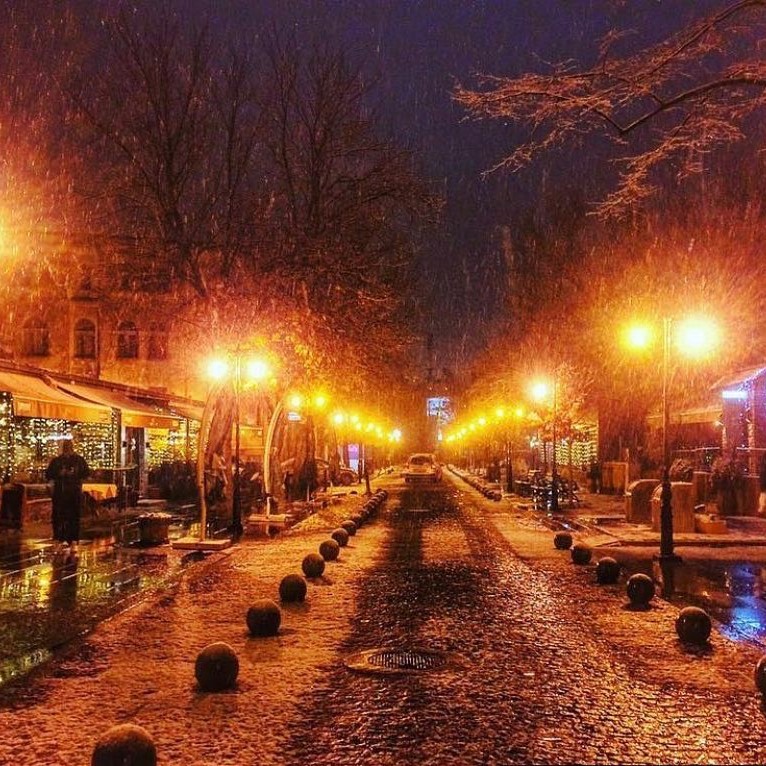
Debar, North Macedonia: A Borderland Town of Lake Light, Mountain Roads, and Deep Craft Tradition
Debar, North Macedonia feels grounded from the first hour. The town sits close to the Albanian border, at the meeting point of mountain roads, lake views, river valleys, and older trade routes that once linked western Macedonia with the wider Balkans. Today Debar serves as the center of its municipality, and the wider area still carries the layered identity of a borderland town shaped by movement, exchange, and daily life close to water and high terrain. That setting gives Debar a very different mood from Ohrid or Skopje. It feels more local, more rugged, and more closely tied to the land around it.
What makes Debar worth writing about in a longer way is the balance it offers. You have a working town with a strong local character. You also have one of the country’s great monasteries nearby, an artificial lake that softens the whole landscape, and thermal baths that have shaped the area’s reputation for generations. Add Korab, Radika, and the wider Mavrovo Debar region, and the town starts to feel like the natural doorway to a whole western Macedonian world of cliffs, forests, water, and craftsmanship.
Where Debar Sits and Why the Landscape Matters
Geography explains Debar better than any slogan can. The town lies in western North Macedonia near the border with Albania, about 52 kilometers from Struga and 131 kilometers from Skopje. It stands at about 625 meters above sea level in the Debar field, on the shore of Debar Lake, right where the Radika flows into the Crn Drim. Mountains ring the area on every side. Deshat and Krčin rise near the town, while Stogovo and Jablanica shape the wider horizon. This creates a landscape that feels open in the valley and dramatic at the edges.
That mountain frame also shapes the local climate and the travel experience. Official tourism material describes Debar’s climate as a mix of continental, mountain, and Adriatic influences carried inland along the Crn Drim valley. Winters bring snow, while summer gains relief from altitude, lake air, and the nearby slopes. As a result, Debar works well for different kinds of trips. Summer suits lake walks and spa time. Cooler months fit cultural stops, market visits, and drives through the wider region.
A Crossroads Shaped by Trade, Caravans, and Ottoman Urban Life
Debar has deep roots, and its role as a crossroads comes through clearly in the historical record. Sources describe the town as known to Byzantine writers, then later ruled by regional powers before falling under Ottoman rule in 1395. Under the Ottomans, Debar became the seat of the Sanjak of Dibra and developed into an active commercial center. One late Ottoman account recorded 420 shops, 9 mosques, 10 madrasas, 5 tekkes, and a population of around 20,000, which gives a clear sense of how important Debar once was in the western Balkans.
Official tourism material reinforces that image from another angle. It states that the old Via Egnatia corridor passed through Debar and that long caravan columns once moved through the town toward Albania, Thessaloniki, Skopje, and other regional centers. The same source also describes a strong urban craft tradition, with goldsmiths, tailors, blacksmiths, coppersmiths, painters, fresco painters, and bricklayers all active in the town. That matters for today’s visitor because it explains why Debar still feels shaped by work, skill, and exchange rather than by scenery alone.
Bigorski Monastery Gives the Region Its Spiritual Center
Any serious article about Debar, North Macedonia needs to spend time on Saint Jovan Bigorski Monastery. The monastery stands on the road between Debar and Gostivar along the Radika, and it gives the whole region one of its deepest cultural anchors. The monastery’s own official site states that John of Debar founded it in 1020, while national tourism material adds that the complex later rose again in the 18th century after earlier destruction. This long continuity explains why the place carries such weight. It joins medieval faith, regional identity, and living religious life in one setting.
Bigorski also matters for its art. National tourism sources describe the monastery as widely known for its iconostasis, carved by Petre Filipov Garkata and other мастери from nearby villages between 1829 and 1835. The work stands out for its dense wooden carving, layered belts, and rich flora and fauna ornament. Visitors often arrive for the architecture and the mountain setting, yet the iconostasis usually becomes the moment that fixes the visit in memory. This is one of those places where craftsmanship, devotion, and landscape all pull in the same direction.
The approach adds to the experience. The road follows the Radika through one of western North Macedonia’s finest valleys, with steep slopes, forested stretches, and shifting views that prepare you for a site of this kind. That makes Bigorski more than a single stop on a map. It becomes part of a wider Debar day that connects town, river, mountain, and monastery into one coherent journey.
Debar Lake Brings Space, Light, and a Slower Rhythm
Debar Lake changes the whole mood of the town. Official tourism sources describe it as an artificial lake created by the Shpilje dam in 1969 near the Macedonian Albanian border, at the confluence of the Crn Drim and Radika. The same source gives the lake an area of 13.2 square kilometers and notes its role in power generation and irrigation. Those figures matter, yet the visitor feels something simpler first. The lake gives Debar breadth. It opens the valley, reflects the surrounding slopes, and adds calm to a town otherwise defined by roads and mountain massifs.
The lake also makes Debar easier to enjoy at a slower pace. Official tourism writing points to fishing, recreation, and lakeside scenery as part of the local draw. Even a short shoreline stop helps explain the town’s character. From one angle, you see the built-up edge of Debar. From another, the lake stretches out under a ring of mountains and carries your eye toward the wider region. It works especially well in the late afternoon, when the light softens and the landscape begins to feel wider and quieter.
The Thermal Baths Keep Debar Close to the Body and the Land
Few places in North Macedonia tie spa culture to local geography as closely as Debar does. The Debar Baths in Banjishte and Kosovrasti form one of the area’s defining experiences. Official tourism sources state that the region has long been known for thermo mineral waters, with older pools in Banjishte dating to 1797 and the modern baths founded in 1948. These sources also describe the baths as a center for rehabilitation, recreation, and relaxation, which shows how strongly the springs continue to shape Debar’s identity.
The water itself gives the baths their reputation. National tourism material reports temperatures of about 39 degrees Celsius in Banjishte and 41 degrees Celsius in Kosovrasti, while the Kosovrasti source runs at about 48 degrees. The same material places Kosovrasti beside the Radika, with views toward Debar Lake and access to walking paths, mountain scenery, and the wider canyon landscape. That combination explains the appeal. You come for the mineral water, yet the experience also depends on the setting. Hills, river, lake, and clean air all become part of the same restorative rhythm.
Crafts, Markets, and the Human Mix of Debar
Debar’s cultural story grows from people as much as place. The 2021 census tables for Debar Municipality show a mixed population that includes Albanians, Macedonians, Turks, and Roma, and that blend helps explain the town’s layered daily life. You hear it in language, see it in religious buildings and shop signs, and feel it in the overlap between food, family customs, and public space. In a country full of strong local identities, Debar stands out for how clearly it carries a borderland cultural mix.
That mix has long supported a serious craft tradition. Official tourism material on Debar highlights goldsmithing, tailoring, blacksmithing, coppersmithing, painting, fresco painting, and bricklaying as established local trades. Other historical sources also note that the Debar region produced respected woodcarvers and builders whose work appeared across the Balkans. This background matters because it gives the town a cultural depth that goes beyond sightseeing. When you walk through the center, browse local shops, or look at carved church interiors in the wider region, you are seeing the afterlife of skills that shaped Debar’s reputation for centuries.
What to Eat and How to Build a Good Day in Debar
Food gives Debar another strong local layer. A recent gastronomic map from the national tourism portal tags Debar with jufki, which points to the town’s place in the broader culinary culture of handmade pasta and home cooking. Older national gastronomy material also records an old Debar recipe that serves meat with dried plums, which suggests a local kitchen shaped by mountain produce, hearty meals, and older household practice. For visitors, that means Debar rewards simple choices. Look for home-style food, fresh bread, grilled meat, and dishes that feel tied to the valley rather than built for display.
A strong full day in Debar usually begins in town, continues with the lake, then expands outward. Start with a walk through the center and a relaxed coffee. Move to Debar Lake for wider views, then head toward the baths or continue into the Radika valley for Bigorski. If you have extra time, the wider Mavrovo Debar region opens even further toward Korab, whose national tourism page identifies Golem Korab at 2,764 meters as the highest peak in the country. That makes Debar an excellent base for travelers who want one destination that can grow into a wider regional route.
Practical Tips for Visiting Debar
Debar stays relatively easy to reach by road, yet a car makes the experience much better. The town itself is simple to navigate, though the real strength of the area lies in how easily it links town life with lake edges, spa villages, monastery visits, and mountain drives. Official tourism material gives useful distance markers to Struga, Gostivar, and Skopje, and those distances show that Debar works well as a planned stop on a wider western North Macedonia route. Budget-wise, the town also tends to feel more grounded and less polished than larger tourist centers, which often adds to its appeal.
This version focuses on details that current official or reference sources support clearly, especially Debar’s geography, Ottoman trade role, Bigorski, Debar Lake, the baths, and the wider mountain setting. That confirmed backbone already gives Debar more than enough substance for a full article.
Why Debar Deserves More Attention
Debar leaves a strong impression because it does several things at once. It offers history that still feels visible in the town’s old commercial memory. It offers landscape in the form of lake, canyon, river, and mountain. It offers spiritual and artistic depth through Bigorski. It offers recovery and local routine through the thermal baths. Very few places bring all of that together in such a compact area.
For travelers who want a softer, deeper, and more regionally grounded side of North Macedonia, Debar stands out. The town does not rely on spectacle. It works through texture, setting, and continuity. Debar, North Macedonia rewards people who like places where history still shapes the present, where roads lead quickly from a town square to a monastery or a hot spring, and where the landscape stays part of the story from first coffee to last light on the lake.

Tours that include this place
Bigorski Debar Retreat

Explore Vevčani’s mountain springs, marvel at Bigorski Monastery’s carved iconostasis, then unwind in Debar’s mineral baths. A restorative 13-hour mix of faith, nature, and wellness.
Radika Mavrovo Loop
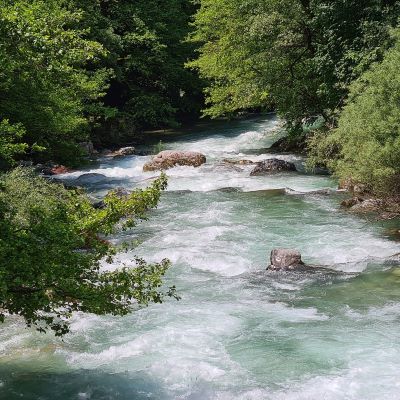
Soak in Debar’s thermal pools, trace the Radika canyon to chanting Bigorski, lunch by Mavrovo Lake, and return via quiet Kičevo valleys. A scenic 13-hour loop of waters, canyons, and villages.
Debar Thermal Getaway

Morning amid Ohrid icons, then unwind in Debar’s mineral pools with optional treatments; finish with lakeside coffee. A soothing 10h balance of culture and wellness.