
Lake Prespa Guide: Birds, Villages, Islands, and Quiet Shores Across Three Countries
Lake Prespa feels different from the first minute because it gives you space in every direction. The water sits high in a mountain basin at about 853 meters above sea level, and Great Prespa spreads across North Macedonia, Albania, and Greece. The wider Prespa basin includes Great Prespa and Lesser Prespa, and conservation groups describe it as one of Europe’s richer biodiversity areas, with strong fish endemism, major birdlife, and several protected areas around the shores and mountains. This is also an ancient lake system. Ramsar describes Lake Prespa as a Pliocene lake, and Swiss development material on the basin calls it part of a globally unique hydrological system.
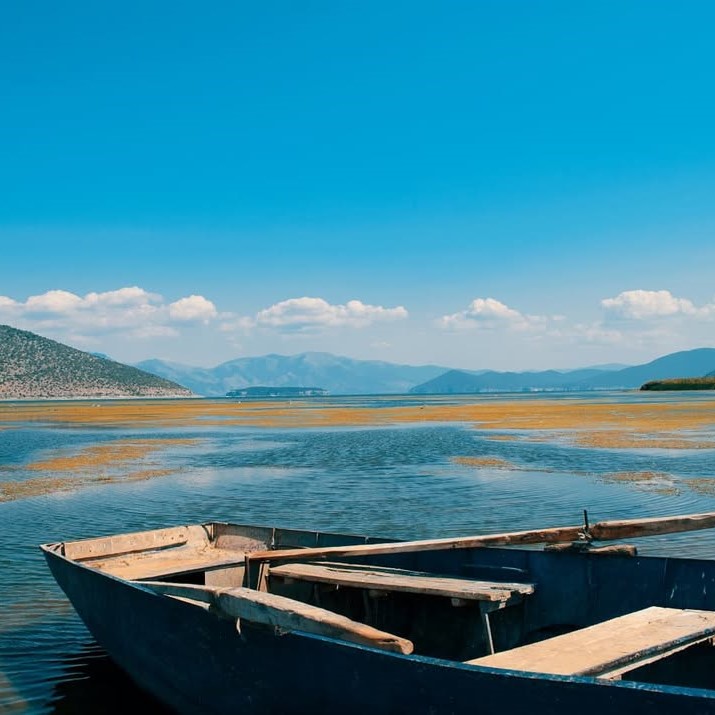
That ancient character helps explain why the place feels older than a simple beach destination. Prespa did not grow around one waterfront town or one marquee attraction. It formed as a large mountain world of water, orchards, wetlands, fishing villages, and high ridges. The European Green Belt describes Great Prespa as a 273 square kilometer lake at about 850 meters, surrounded by mountains that rise above 2,500 meters. The same source calls the Prespa lakes the highest tectonic lakes in the Balkans. When you stand at the shore, you see exactly what that means. The lake looks broad and calm, while the surrounding slopes give it shape, height, and a quiet sense of enclosure.
Prespa also matters because water here does more than stay in one basin. The limestone and karst landscape around the lake connect Prespa with Ohrid through underground flows. Galichica National Park explains that porous limestone allows water to move through the massif, and Britannica notes that Lake Prespa links with Lake Ohrid by subterranean channels. That hidden connection gives Prespa a larger scientific and geographic role than its peaceful surface first suggests. It also helps travelers understand why a day around Prespa pairs so well with Galichica. The ridge between the two lakes does not divide two separate worlds. It links them in stone, water, and ecology.
Birdlife gives Prespa its strongest natural identity. The Prespa Ohrid Nature Trust calls the lakes a wetland of international importance and reports more than 272 bird species in the basin, including 143 breeding species. It also says Lesser Prespa holds the world’s largest breeding population of Dalmatian pelicans, with roughly 1,150 to 1,530 pairs, or about one fifth of the global population. Great Prespa plays a key supporting role in that story. The Ramsar site description for Lake Prespa says the lake provides important feeding areas for large numbers of pelicans that breed nearby in Greece. In plain terms, that means birdwatchers do not come here for one lucky sighting. They come because Prespa functions as a full bird landscape.
That ecological richness becomes easier to read when you stop near the North Macedonian wetlands. On the northern shore, Ezerani Nature Park covers 1,917 hectares of wetlands and meadows along Lake Prespa and serves as one of the main habitat areas for birds on this side of the basin. Resen Municipality manages Ezerani together with Lake Prespa Monument of Nature, and tourism material for the area highlights birdwatching towers and visitor infrastructure within the wider Prespa wetland zone. Stenje, farther south on the shore, gives travelers another strong base for lake views, wetland access, and boat departures. If your main goal is birds, reeds, and a quieter shoreline rhythm, the northern and western North Macedonian sections usually reward a slower pace than the busier Ohrid side.
Golem Grad gives Prespa one of its boldest and strangest sights. Galichica National Park describes it as the largest island in North Macedonia, about 750 meters long and 450 meters wide, rising about 50 meters above the lake. The park also explains why people call it Snake Island. The island supports outsized dice snakes and wall lizards, along with dwarfed nose horned vipers, cormorants, and Dalmatian pelicans. Yet Golem Grad is not only a wildlife stop. The same official page lists the churches of St Peter and St Dimitrija, plus an early Christian basilica with discovered floor mosaic remains. That mix of reptile habitat, birdlife, and ruined sacred architecture gives the island a rare atmosphere. It feels wild, exposed, and deeply old at the same time.
The island also adds one of the best half day experiences on the lake. Galichica’s current ticket page lists a daily visitor fee for Golem Grad, and North Macedonia Timeless says travelers usually arrange boat transport from villages such as Stenje and Konjsko. That practical detail matters because Golem Grad works best as a planned stop rather than a casual pull off. Once you land, the visit gives you more than a boat ride. You read the lake from offshore, see the limestone coast from a new angle, and walk through a compact island where ecology and history sit side by side. For photographers, the approach alone makes the trip worthwhile. For travelers who want a deeper Prespa memory, Golem Grad often becomes the highlight of the day.
Prespa’s human story runs just as deep as its natural one. Tourism material for Resen says Prespa culture reaches back to Neolithic times and that the Roman Via Egnatia crossed the valley during the Roman Empire. That route matters because it places Prespa inside a long corridor of movement rather than at the edge of history. Roads, lakeside settlements, churches, and farming communities all grew from that position. Today the region still feels shaped by passage and exchange. Three countries meet at the water. Several languages and local traditions still share the basin. The result is a lake that feels culturally layered without losing its rural calm.
Food and farming give that human side a strong local face. Swiss development material on the basin says the regional economy on the North Macedonian side relies primarily on agriculture, especially apple cultivation. Meet Prespa also presents the Prespa Apple Harvest as the area’s largest economic and cultural event. That orchard culture shapes the landscape around Resen and the villages near the lake, where rows of apple trees sit close to wetlands, reed beds, and mountain slopes. On the table, fish remains central too. Visit Prespes notes that the lakes support 21 fish species, eight of them endemic species or subspecies, and highlights carp and tsironi among the signature local tastes. In other words, Prespa feeds both the eye and the plate through the same landscape.
If you extend your route into Greek Prespa by road, Psarades makes a rewarding stop because it shows a different face of the same lake. Visit Prespes describes Psarades as the only Greek village on the shore of Great Prespa, with a strong fishing identity, traditional houses, and important religious monuments. The same page says local taverns serve recipes based on lake fish, and it notes that caves along the rocky shore served as hermitages. That combination of fishing village, religious history, and lakeside food makes Psarades feel intimate and distinct from the North Macedonian shore. It is a natural add on for travelers who want to understand Prespa as one basin rather than three separate national stories.
Season matters at Prespa, especially if birds shape your plans. Visit Prespes explains that great white pelicans arrive around April, while birding sources for the basin describe spring as the best overall season and list spring, summer, and autumn as strong birding periods. That matches what the landscape offers on the ground. Spring brings movement, sound, nesting activity, and fresh light over the reeds. Early autumn adds calmer roads, softer weather, and a rich orchard season around Resen. Summer still works for general sightseeing, swimming, and boat trips, yet bird focused visitors usually gain more from late spring or early autumn. A traveler who wants the lake at its clearest and richest often does well by planning around those windows.
Lake Prespa also works beautifully with nearby mountain routes. Galichica gives you the famous ridge views between Ohrid and Prespa, while a Prespa day itself can center on Stenje, Ezerani, Golem Grad, and the orchard country near Resen. This flexibility is one of the lake’s biggest strengths. You can shape the day around birds, history, food, photography, or simply quiet driving between villages and viewpoints. At the same time, current cross border infrastructure around the basin is still evolving. Interreg project pages show the Markova Noga to Lemos border crossing under development, with the goal of cutting travel time between Resen and the Greek side. Until that project opens fully, road planning still matters for anyone building a tri country loop.
What finally makes Prespa special is the way it rewards attention. Lake Ohrid often wins faster recognition, yet Prespa gives back something quieter and, in a different way, richer. You notice the reeds before the birds rise from them. You notice orchards before you taste the apples. You notice the island from shore, then understand its scale only once the boat leaves the village behind. The basin teaches you slowly. That is exactly why it stays in memory. Prespa is not a place you rush through for one photo. It is a place you read, shore by shore, village by village, until the whole mountain lake world starts to make sense.

Tours that include this place
Prespa Ohrid Panorama

Scenic 12-hour corridor: Bitola monuments, Heraclea mosaics, Rotino, Molika, Malovište, Prespa pelicans, Galichica ridge, St. Naum springs, Bay of Bones, Ohrid sunset. Archaeology, wildlife, water.
Snake Island Konjsko

Seasonal adventure: boat Prespa to wild Golem Grad (Snake Island), village Konjsko lamb lunch, then Galichica ridge and Bitola monuments. Wildlife, flavors, and views in a rare nine-hour experience.
Konjsko Village Lunch

Feast on bell-baked lamb and village wine in Konjsko, cruise Prespa to ruins and wildlife on Golem Grad, then tour Bitola’s monuments. Rustic flavors, island nature, heritage—13 hours.
Snake Island Lakes
Boat Prespa to wildlife-rich Golem Grad, lunch in Konjsko, crest Galichica for twin-lake views, then explore UNESCO Ohrid. A vivid 13h mix of nature, panoramas, and heritage.