
Matka Canyon: Vrelo Cave, Monasteries, Hiking, and Travel Guide
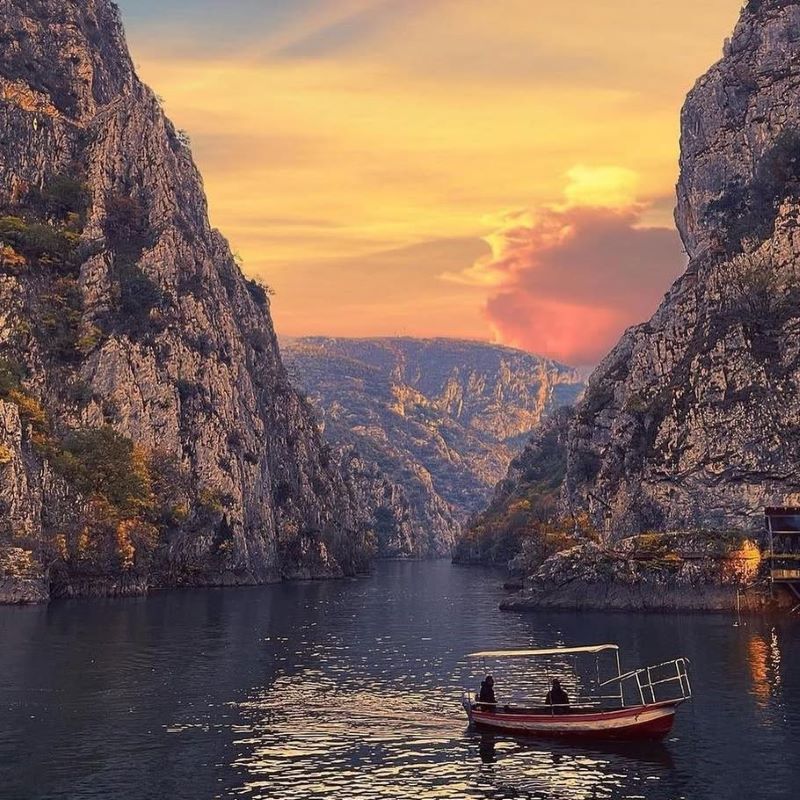
Matka Canyon gives Skopje one of its strongest escapes. In less than an hour, the city falls away and steep limestone walls, green water, cliff paths, caves, and medieval monasteries take over the view. The canyon lies roughly 15 to 17 kilometers southwest of central Skopje and covers about 5,000 hectares, which makes it both close and surprisingly large for a half day trip. That mix of easy access and dramatic scenery explains why Matka stands near the top of travel lists for North Macedonia.
Why Matka Canyon matters
Matka matters because it brings several parts of North Macedonia together in one place. You get geology, water, wildlife, religious heritage, and outdoor activity inside a single narrow valley. The City of Skopje describes Matka as a canyon of the Treska River with karst forms, caves, endemic plants, and rare animals, while North Macedonia Timeless presents it as a natural area rich in oak and beech forest, butterflies, birds, and speleological sites. For a first time visitor, that means Matka works on several levels at once. It feels scenic at first glance, then richer with every stop along the shore and trail.
The canyon also gives travelers an easy way to understand the landscape around Skopje. The capital often gets attention for monuments, museums, and the Old Bazaar, yet Matka shows another side of the region. Here, the terrain narrows, the rock rises sharply, and the water creates a calm corridor through the gorge. That contrast makes the trip memorable. You leave an urban setting behind and enter a place shaped by stone, river flow, and centuries of human movement along the same route.
How Matka took shape
Matka carries both natural and human history. The gorge itself belongs to a longer geological story, yet the lake that visitors see today took shape after engineers dammed the Treska River in 1938. North Macedonia Timeless describes this as the first artificial accumulation on the Balkan Peninsula, while travel and city sources also point to 1938 as the year that created Lake Matka. That detail matters because it helps explain the strange harmony of the place. The cliffs and caves feel ancient, while the lake adds a more recent human layer to the canyon.
This layered history gives Matka much of its charm. The lake never erased the older spiritual and cultural life of the gorge. Monasteries still sit above or beside the water, and the canyon still holds cave sites, old paths, and quiet corners that feel removed from modern time. As a result, a visit here rarely feels like a simple boat stop. The setting keeps drawing your attention from nature to history and back again.
A gorge of stone, water, and rare life
Matka’s geography gives the canyon its strong visual pull. Visit Skopje describes the area as a limestone gorge cut by the Treska, while the City of Skopje highlights its karst relief and cave system. In plain terms, water and rock have worked together here for a very long time. That process carved steep walls, openings in the cliff, and a narrow lake corridor that looks almost painted when the light hits it in the morning.
The same terrain also supports an unusual concentration of life. North Macedonia Timeless reports 119 species of day butterflies and 140 species of night butterflies in the canyon, including 77 species of Balkan endemic small butterflies. The tourism pages also point to endemic plants, birds of prey, and other rare forms of life that found refuge in the gorge. For visitors, this means Matka offers more than a pretty viewpoint. It works as a small natural classroom where geology and biodiversity sit side by side.
That ecological richness adds value even for travelers with little scientific background. You do not need expert knowledge to enjoy the sight of butterflies above the trail or the sudden silence of the canyon walls around the lake. Once you know that endemic species live here, the whole visit feels deeper. Every hike and boat ride starts to feel connected to a fragile local world rather than a generic excursion site.
Vrelo Cave and the boat ride that defines Matka
For a large share of visitors, Vrelo Cave becomes the highlight of the day. The cave sits on the right bank of the Treska and boat operators take travelers there from the main lakeside area. Cave Vrelo’s official site says the cave entered the Top 77 list in the New7Wonders of Nature campaign, and the New7Wonders archive confirms Vrelo Caves as part of that Top 77 list. That distinction matters because it shows how strongly this small site stands out in international imagination.
The cave itself combines easy access with real mystery. Tourism and operator sources describe Vrelo as one of Europe’s deepest underwater caves, while also making clear that explorers still have not fixed a final depth. Inside, visitors see stalactites, underground lakes, and a striking central stalagmite often called the Pine Cone because of its shape. This gives the cave a double appeal. Casual travelers can enjoy a short, beautiful stop, while people drawn to caves and exploration leave with the sense that Vrelo still holds unanswered questions.
The boat ride to Vrelo adds almost as much value as the cave itself. As the boat moves deeper into the canyon, the cliffs rise more sharply and the lake narrows into a corridor of green water and rock. That approach helps explain why Matka works so well for first time visitors. Even if you skip longer hikes or climbing routes, the boat ride still gives a full sense of the canyon’s scale, calm, and enclosed beauty.
The sacred side of Matka
Matka also carries a strong religious and artistic dimension. St. Andrew’s Monastery stands by the artificial lake and dates to 1388 or 1389, when Andrea, the second son of King Vukašin, built the church. North Macedonia Timeless notes the monastery’s inscriptions and fresco program, and Visit Skopje calls attention to scenes such as the Last Supper, the Descent from the Cross, and the Prayer on the Mount of Olives. These details matter because they turn a scenic stop into a meaningful encounter with late medieval art and devotion.
The wider canyon adds still more sacred sites. Visit Skopje points travelers to St. Nikola high above the lake and to the Matka Monastery on the left bank of the Treska. Together these churches and monasteries create a landscape where stone, water, and worship have long shaped each other. That is one reason Matka feels more layered than a simple nature reserve. Pilgrims, monks, local builders, painters, and travelers have all left traces here, and the gorge still carries that memory clearly.
Hiking, kayaking, and climbing
Matka rewards active travelers as much as sightseers. Local tourism pages describe kayaking on the canyon water, rock climbing on the limestone walls, and hiking routes that follow the gorge and connect the monasteries. Visit Skopje also calls the Treska canyon the key climbing center in the northern part of the country and says the season runs from spring into November. That broad activity range gives Matka a rare flexibility. A calm visitor can take a boat and a coffee by the water, while a stronger hiker or climber can build a much longer day around the same landscape.
Hiking deserves special attention because it changes how the canyon feels. From the waterline, Matka seems quiet and enclosed. From the trail, it opens up. The turns in the path reveal cliff faces, monastery viewpoints, and stretches of water that look entirely different from above. Even a short walk adds a sense of discovery, especially for travelers who want more than the standard cave trip.
Practical planning from Skopje
Matka works best when you keep the plan simple. Since the canyon lies close to Skopje and draws steady day trip traffic, an early start usually gives a calmer atmosphere on the trail and at the boat area. Public transport also reaches the canyon. Visit Skopje currently points travelers to bus line 60, and JSP Skopje’s timetable portal continues to publish notices for line 60 services, so checking the transport operator before departure makes sense.
Good shoes help more than travelers often expect. The lakeside area feels easy and relaxed, yet the paths and monastery approaches can turn stony, warm, and uneven. Water, sun protection, and a little extra time also improve the visit, especially from late spring through early autumn. If you want Vrelo Cave, head there first, then build the rest of the day around the lakefront and the trail. That order usually keeps the visit smooth and lets the canyon unfold gradually rather than all at once.
How to build a half day or full day around Matka
For a half day trip, Matka can easily stand on its own. Start with the main lakeside area, take the boat to Vrelo Cave, visit St. Andrew’s Monastery, and add a short walk along the cliff path before heading back to Skopje. That route covers the canyon’s core strengths in a manageable span, water, cave, sacred art, and scenery.
If you have a full day, pair Matka with Mount Vodno and the Millennium Cross. Visit Skopje’s current guides describe the cable car from Sredno Vodno as a direct route to the cross and highlight the panoramic city views from the summit. In practice, that pairing works well because it gives you two very different landscapes in one day. Vodno opens wide over Skopje, while Matka narrows into rock and water. Together they show how varied the capital’s surroundings can feel in a short distance.
Why Matka leaves such a strong impression
Matka Canyon stays with people because it feels complete. The place gives you movement, silence, history, and scenery without demanding a long transfer or a complex plan. You can arrive from Skopje in the morning and by lunchtime you have already seen a gorge, a medieval monastery, rare butterflies, and one of the region’s better known caves. Few destinations so close to a capital city deliver that much contrast in such a small area.
That is the real strength of Matka. The canyon does not rely on one famous view alone. It builds its effect through layers, the water created in 1938, the older sacred landscape around it, the caves inside the limestone, and the living natural richness of the gorge. For travelers with limited time in North Macedonia, Matka gives an easy and rewarding first step into the country’s wider character.

Tours that include this place
Skopje Matka Canyon
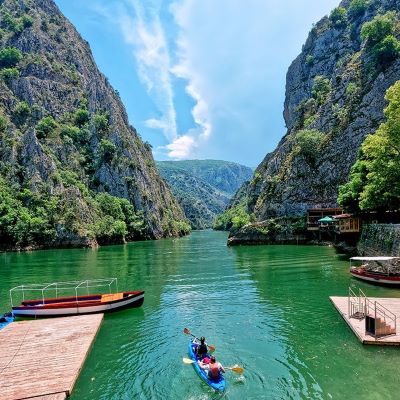
Explore Skopje’s Old Bazaar, Stone Bridge, and Kale, then boat Matka Canyon to Vrelo Cave. Cap the day with Bitola’s evening highlights. Capital contrasts and canyon calm in 13 hours.
Ohrid Skopje Matka

Lakeside Ohrid morning, Skopje’s Stone Bridge and Old Bazaar at midday, then boat Matka Canyon to Vrelo Cave. A seamless 12h sweep of culture, capital, and nature.