
Bitola Monuments: Heraclea, Širok Sokak, Old Bazaar, and the Story of a City of Layers
Bitola gives travelers one of the clearest introductions to North Macedonia’s urban history. The city stands on the Dragor River at 615 meters above sea level, near the Greek frontier and at the western edge of the Bitola Plain in Pelagonia. Baba Mountain rises close by and gives the city a strong natural frame, so Bitola always feels connected to both valley and mountain. That setting helps explain why the city grew into a strategic crossroads over so long a period.
Why Bitola feels richer than a standard city break
Bitola carries several cities inside one city. Ancient Heraclea Lyncestis lies just south of the modern center. Ottoman Bitola shaped the bazaar, mosques, baths, and military role of the town. The 19th century then gave the city a new face through consulates, schools, elegant façades, and a wide European-style promenade. Bitola Info’s recent city history pages describe that consular period as a turning point, when diplomats, merchants, and local families pushed the city toward a more cosmopolitan urban life.
That layered growth still shows in the street plan and in the way visitors move through the city. A morning can start in a Roman theater, continue through an Ottoman bazaar, then end over coffee on Širok Sokak under façades shaped by late 19th and early 20th century tastes. Few cities in North Macedonia let you read so much history through such a compact urban route.
Heraclea Lyncestis explains where the story begins
Any serious visit to Bitola should begin with Heraclea Lyncestis. Official heritage material and museum sources trace the site to Philip II of Macedon, who founded it in the 4th century BC in ancient Lyncestis. Later, its position along Via Egnatia gave the city commercial and strategic strength inside the Roman world. That road connection mattered enormously because it linked the settlement to a larger imperial system of trade, military movement, and communication.
Today Heraclea sits about 2 kilometers south of present-day Bitola, which makes it easy to include even on a short trip. The site covers about 4 hectares, and museum material says around 1,300 square meters hold mosaics. Those mosaics give Heraclea its deepest visual impact. The museum specifically highlights the Early Christian mosaics and describes figurative portraits and rich decorative programs in the basilica complex. In practice, that means visitors see more than ruins. They see color, movement, animals, birds, geometry, and the artistic confidence of a city that once held real regional importance.
Heraclea also rewards slow walking. The Roman theater, basilicas, porticoes, and urban remains help visitors understand how the city once worked as a full settlement rather than an isolated monument. You can trace public life, worship, movement, and performance in one archaeological field. That makes Heraclea especially useful for travelers with limited background in ancient history, because the site reads clearly on the ground.
Širok Sokak shows Bitola at its liveliest
After Heraclea, Širok Sokak brings you into the city’s social heart. Bitola Info describes it as the city’s main urban artery for centuries and as the place where cultures met, trade flourished, and daily life unfolded. The street changed official names with changing rulers, yet local people kept the popular name Širok Sokak, or Wide Street, and that name survived into the present.
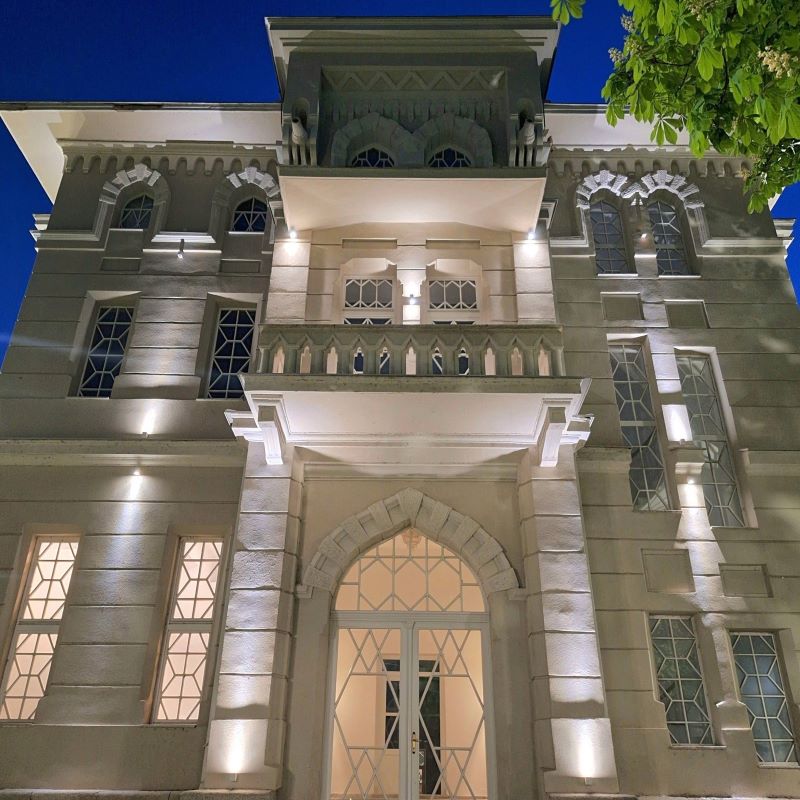
The street matters because it captures Bitola’s consular identity better than any single building. During the second half of the 19th century, Bitola became known as the City of Consuls. Foreign consulates chose the city as a diplomatic base, and that presence helped reshape architecture, education, commerce, and everyday urban culture. As Bitola Info notes, Širok Sokak emerged as the main stage for that new social world. Its façades, cafés, and strolling culture still carry that atmosphere very clearly.
For visitors, this part of the city works best without hurry. A slow walk along Širok Sokak reveals how Bitola absorbed European influence without losing its local rhythm. You see formal city palaces beside active cafés, older façades beside newer storefronts, and a promenade culture that still shapes the identity of the town. The street does more than connect landmarks. It explains the city’s personality.
The Clock Tower and Magnolia Square anchor the center
Near the core of the center, the Clock Tower gives Bitola one of its key vertical landmarks. Bitola Info records evidence for a clock tower here as early as 1664, while historians generally date the present structure to around 1830. The same source places the tower at 32 meters in height and links it closely to the nearby Church of St. Demetrius. That pairing matters because it reflects a period of major building activity that helped define modern Bitola.
The tower also carries one of the city’s better known legends. Bitola Info preserves the story that builders mixed eggs into the mortar to strengthen the walls. Whether visitors take that story as folklore or civic memory, it adds to the local texture of the monument. The confirmed facts already make the tower important. The legend simply gives it a Bitola voice.
A short walk away, Magnolia Square works as the city’s central meeting place. Recent local tourism material identifies the square with the Monument of Philip II of Macedon and presents it as a symbolic link between ancient Heraclea and modern Bitola. Even if visitors care less about monuments and more about urban atmosphere, the square still works well as an orientation point before moving toward the clock tower, Širok Sokak, or the bazaar.
The Old Bazaar preserves Bitola’s Ottoman depth
If Širok Sokak shows Bitola’s European face, the Old Bazaar shows its Ottoman commercial memory. Bitola Info describes the bazaar as one of the larger and better-preserved oriental bazaar complexes in the Balkans and notes that its development accelerated after the Ottoman arrival in 1382 and 1383. A key step came with the construction of the Bezisten, the covered market, at the end of the 15th century. Around it, shops and workshops formed a dense urban fabric that grew over centuries.
The bazaar reached a high point in the 19th century, when Bitola thrived as a trading center with links to both European and eastern markets. Bitola Info says that at its peak the bazaar held around 30 markets and more than 2,500 shops. Fires later changed its appearance, and only part of that larger system survives today, yet the remaining streets still give a strong sense of a working trade quarter shaped by craft, exchange, and movement.
This area rewards careful walking because its interest lies in texture as much as monumentality. Stone paving, older shop fronts, small craft spaces, and layered urban views give the district its strength. Travelers who rush through the bazaar often miss the way it balances formal heritage and ordinary city life. That balance is exactly what makes the quarter memorable.
Yeni Mosque, Deboj Hamam, and Haydar Kadi Mosque deepen the Ottoman story
Within and around the bazaar zone, several Ottoman monuments add depth and variety. Yeni Mosque dates to 1558 and 1559, according to Bitola Info, and today serves an artistic role as a gallery space. The same source highlights its richly decorated interior, rare faience elements at the portal, and the remains of the medieval Church of St. George beneath it, now conserved and visible. That layered use of sacred ground tells you a great deal about Bitola’s long urban life.
Haydar Kadi Mosque adds another architectural landmark. Bitola Info dates it to 1561 and 1562 and notes that some sources connect its design to Mimar Sinan. The same page records a full renovation that began in 2012 with Turkish funding after long decline. Even from outside, the mosque stands out for its position by the Dragor and for the balance of stone and brick that gives it elegance without excess.
Deboj Hamam, also known as the double hammam, belongs to that same Ottoman urban layer and helps visitors imagine Bitola as a city of markets, baths, mosques, and specialized neighborhoods. Together with the Bezisten and the surviving bazaar streets, these monuments show that Bitola’s Ottoman phase shaped both commerce and civic life at a very deep level.
St. Demetrius Church reveals another side of 19th century Bitola
St. Demetrius Church gives the city one of its strongest interior experiences. Bitola Info dates the church to 1830 and explains that Ottoman rules required a modest exterior and a lower profile than nearby mosques. For that reason, builders set part of the church below ground level. This solution still shapes the visitor experience today. From outside, the church appears restrained. Inside, it opens into a richly decorated and spacious world.
The iconostasis, galleries, bishop’s throne, and pulpit give the interior its artistic force. Bitola Info dates the two-tier iconostasis to the mid 19th century and notes its later gilding and finishing. This kind of contrast, modest outside and lavish inside, captures an important truth about Bitola. The city often hides its richest details behind a quieter first impression.
The museum and the military academy link Bitola to wider Balkan history
A fuller Bitola route should also include the museum building, known as the Old Barracks. Bitola Info says the complex rose in 1848 as a military high school during the Ottoman period and later became part of a larger military complex in the city. The same source notes that Mustafa Kemal Atatürk studied there as a cadet, and the museum today keeps a memorial room dedicated to him. That link gives Bitola a direct connection to a major figure in modern Turkish history.
The museum also helps explain why Bitola mattered so much in the 19th century. It served as an administrative, military, and cultural center inside Ottoman European territory. Later wars hit the city hard, especially World War I, and rebuilding changed parts of the urban landscape. When travelers understand that arc, from ancient Heraclea to Ottoman military center to consular city and then to a city scarred by war, the monuments make much more sense together.
How to plan a smooth visit
Bitola suits both a short city break and a longer base for the southwest. Current route data puts the drive from Skopje at about 170 kilometers and around two and a half hours in normal conditions. The Medžitlija to Níki border crossing lies about 14 kilometers south of the city, which makes Bitola useful for travelers moving between North Macedonia and northern Greece.
For a half day, focus on Širok Sokak, Magnolia Square, the Clock Tower area, St. Demetrius, and the Old Bazaar. For a full day, add Heraclea Lyncestis, which sits only about 2 kilometers south of town. A second day can include the museum and then shift outward toward Pelister if you want mountain scenery after the city monuments. That progression works well because it mirrors Bitola’s own structure, center first, deeper history second, landscape third.
I could confirm the museum institution’s published visitor hours, yet I could not confirm a current official public schedule for Clock Tower interior access from the sources I reviewed. If climbing the tower matters for your plan, ask locally on the day. The older center itself stays highly walkable, while Heraclea fits easily by car, taxi, or a longer walk from the center.
Why Bitola monuments stay with you
Bitola stays in memory because the city gives visitors a readable sequence of civilizations rather than a scattered set of sights. Philip II’s Heraclea anchors the ancient story. Via Egnatia explains movement and exchange. The bazaar, baths, and mosques express Ottoman urban life. Širok Sokak and the consular legacy show Bitola’s European turn. The museum and war history reveal how the modern city emerged through upheaval and renewal.
That is why Bitola works so well for travelers who want education and atmosphere in the same place. The monuments do not stand apart from daily life. They still shape the routes people walk, the squares where they meet, and the identity the city carries with pride. Bitola asks for time, attention, and a slow pace. In return, it gives one of the clearest urban histories in North Macedonia.

Tours that include this place
Bitola Highlights Trek

Three-hour Bitola intro: clock tower, Ottoman bazaar, Yeni & St. Demetrius, Shirok Sokak, Atatürk room, Heraclea mosaics, and panoramic cemeteries. History and views on an easy walk+drive.
Bitola Pelister Heritage

Half-day blend of Bitola’s monuments and Pelister nature: Clock Tower, bazaars, St. Demetrius, Heraclea mosaics, then forest drive to Hotel Molika and Big Rocks lookout. Culture, air, and views.
Prespa Ohrid Panorama

Scenic 12-hour corridor: Bitola monuments, Heraclea mosaics, Rotino, Molika, Malovište, Prespa pelicans, Galichica ridge, St. Naum springs, Bay of Bones, Ohrid sunset. Archaeology, wildlife, water.
Konjsko Village Lunch

Feast on bell-baked lamb and village wine in Konjsko, cruise Prespa to ruins and wildlife on Golem Grad, then tour Bitola’s monuments. Rustic flavors, island nature, heritage—13 hours.