
Radožda: Cave Church, Lake Views, History, and a Beautiful Half-Day Escape
Radožda sits quietly on the western shore of Lake Ohrid, yet the village carries a strong sense of place from the first step. Cliffs rise behind the houses, the lake opens wide in front, and a cave church watches over the shoreline from high in the rock. That mix gives Radožda its character. It feels close to the water, close to history, and close to the slower rhythm that still shapes village life in this part of North Macedonia. For travelers who want more than a quick lake stop, Radožda offers a deeper experience through landscape, faith, food, and memory.
Where Radožda sits on Lake Ohrid
Radožda lies south of Struga on the northwestern edge of Lake Ohrid, near the Albanian border. Public travel and heritage sources place it about 9 to 10 kilometers from central Struga, at roughly 725 to 729 meters above sea level. The village spreads below a rocky ridge tied to the Jablanica range, so the setting feels dramatic even though the settlement itself stays small and calm. You get cliffs, open water, and a close view of the changing light over the lake in one compact place. That setting shapes every part of the visit, from the first approach by road to the final look back at sunset.
Why this small village matters
Radožda matters because it carries an older lakeside identity that still reads clearly today. North Macedonia Timeless calls it a fishermen village, and the Management Plan for the Natural and Cultural Heritage of the Ohrid Region describes it as a typical fishing village that has grown into a rural tourist settlement. That combination tells you a lot. Radožda did not grow around large hotels or a wide promenade first. It grew around the lake, local work, and a close relationship with the shoreline. Later, tourism joined that older structure. As a result, the village still feels grounded in local life even when visitors arrive for lunch, church visits, or a short swim in warm weather.
That history also helps explain why Radožda appeals to travelers who enjoy places with texture. You do not come here for a long checklist of attractions. You come for a village that still carries the imprint of fishing culture, church tradition, and small-scale hospitality. The reward sits in the details. A narrow lane opens to the water. A chapel appears in the cliff. A meal by the lake stretches longer than planned. In a region full of famous names, Radožda wins people over in a quieter way.
A village shaped by older routes
Radožda also connects to a wider Balkan story through the old Via Egnatia route. North Macedonia Timeless notes that a preserved part of the Via Egnatia winter route survives near the village, and Travel2Macedonia places those remains close to the church area. More broadly, the Via Egnatia linked the Adriatic with Thessaloniki and the eastern Balkans, carrying people, goods, news, and armies across the region for centuries. When you place Radožda next to that road, the village stops looking like a simple lakeside hamlet and starts to read as a point on a larger map of movement and exchange.
That context matters for visitors because it adds another layer to a short walk through the village. The lake gave food and transport. The road gave contact with the wider world. The cliffs gave shelter and a natural site for spiritual life. Those three elements, water, route, and rock, help explain why Radožda developed here and why its identity still feels so coherent. Even a brief visit becomes richer when you understand that this quiet stop once stood close to one of the key roads of the ancient Balkans.
The cave church of Archangel Michael
The defining landmark in Radožda is the cave church of Archangel Michael. It sits high in the rock above the village and gives Radožda its strongest image. Heritage sources describe it as a rare church built into a natural cave on the shore of Lake Ohrid. Builders gave the shrine its current architectural form in the 14th century, and inside, visitors can still see valuable layers of wall painting from different periods. Several sources point to frescoes from the 14th century, while one preserved composition reaches back to the 13th century.
The church matters for more than age alone. The iconography gives visitors a direct link to the medieval artistic world of the Ohrid region. Virtual Macedonia highlights the scene of the Miracle at Chonae as a central feature, along with later painted layers inside the naos. That means the church offers more than a scenic stop above the lake. It also gives a compact lesson in religious art, local devotion, and the continuity of worship in a space carved by nature and shaped by human hands. Few places around the lake bring those themes together so clearly in such a small footprint.
The approach to the church adds to the experience. As you rise above the village, the view opens wider and wider across the water. The lake takes on a silver, blue, or soft green tone depending on the hour, and the shore curves away toward Struga and the rest of the Ohrid basin. By the time you reach the chapel, the setting has already done part of the storytelling. Then the interior shifts the mood from open landscape to concentration and silence. That contrast gives the visit its emotional pull.
What to see in the village itself
After the church, the village rewards a slower walk. North Macedonia Timeless lists St. Nikola as the central village church and dates it to the 18th century. The same source notes that seven holy temples stand in the wider village area, which explains why Radožda carries a stronger spiritual profile than its size might suggest. Along the lakefront, the settlement opens into a pebble shore and a relaxed promenade feel, with restaurants close to the water and long views across the lake. Radožda works well on foot because every few minutes the scene changes a little, from churchyard to shoreline to cliff backdrop.
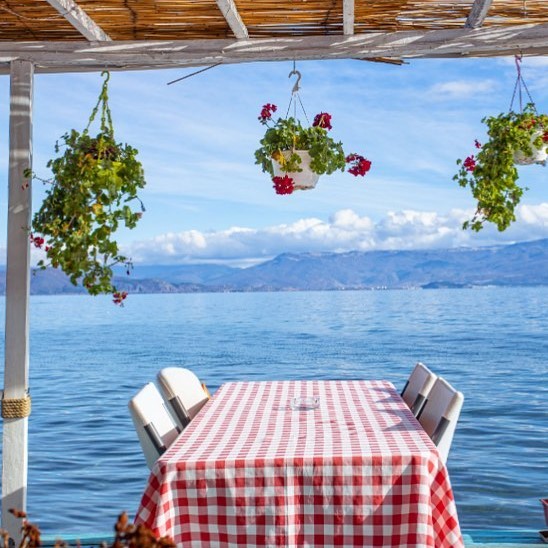
Food forms part of the appeal as well. North Macedonia Timeless points directly to the village’s fish tradition and highlights tastefully prepared fish as a signature part of the stay. That fits the setting perfectly. After the church and a shoreline walk, a lakefront lunch feels like the natural next step. Grilled fish, bread, salad, and a view over the water often do more for the memory of a place than a long list of sights. In Radožda, the meal continues the story of the village rather than interrupting it. The lake stays present on the plate and in the view at the same time.
How to pair Radožda with Struga and Vevčani
Radožda fits especially well into a half-day route with Struga and Vevčani. Travel listings for the area already group Struga, the cave churches near the lake, and Vevčani Springs into one short excursion, and that pairing makes sense on the ground. Struga gives you an urban lakeside start with the Black Drim, bridges, and an easy town walk. Radožda then shifts the mood toward cliffs, church heritage, and a quieter shoreline. Vevčani closes the route with mountain water, spring paths, and a strong village identity of its own.
This route works well because each stop gives a different face of the Struga and Ohrid area. Struga brings river energy and town life. Radožda brings rock, lake, and medieval faith. Vevčani brings springs, higher terrain, and village character shaped by humor and local pride. Together, they create a balanced half day that feels varied and full, yet never rushed. Travelers staying in Ohrid or Struga can fit that loop into one afternoon with ease, especially in spring, early summer, or early autumn when the weather supports both village walking and time by the water.
Practical advice before you go
For a smooth visit, plan Radožda as a place to walk slowly rather than race through. The church and village reward good footing, especially where stone, slope, and lake moisture meet. Warm months bring the fullest lakeside atmosphere, with restaurant terraces active and the shoreline inviting for a longer pause. The village also sits close enough to Struga for an easy detour, so you can visit for two or three hours or fold it into a broader regional route. That flexibility makes Radožda useful for travelers who want a meaningful stop yet still want time for Struga, Kališta, or Vevčani on the same day.
Why Radožda stays in memory
Radožda stays with people because it gives several experiences at once in a very small place. You get the lake, yet you also get height. You get village calm, yet you also get the memory of an old road and a medieval church in the rock. You get lunch by the water, yet you also get the sense that faith and travel have crossed this shore for centuries. That layered feeling makes Radožda richer than its size suggests.
For anyone exploring western North Macedonia, Radožda deserves a place on the route. It offers a strong setting, a clear story, and an easy connection to Struga and Vevčani. More importantly, it offers a kind of quiet depth that travelers often remember longer than bigger landmarks. You arrive for the cave church or the lake view, then leave with a fuller sense of how this corner of Lake Ohrid has lived, prayed, moved, and welcomed guests across the centuries.

Tours that include this place
Ohrid Struga Gems

From Pelister pines to UNESCO Ohrid: stroll medieval lanes, boat to St. Naum springs, sip by Struga’s Drim, and hike to Radožda’s cliff church. A relaxed 10-hour lakeside circuit from Bitola.
Vevčani Springs Escape

Bitola to Ohrid crafts and churches, Struga’s riverfront, Radožda’s cave chapel, and the shaded karst springs of Vevčani. A refreshing 13-hour blend of culture, water, folklore, and forest.
Struga Radožda Vevčani

From Ohrid’s icons to Struga’s Poetry Bridge, climb Radožda’s cliff-chapel, then wander Vevčani’s springs and workshops. A gentle 10h day of waters, villages, and views.
Ohrid Shores Discovery

Tread Bay-of-Bones walkways, boat St. Naum’s springs, lunch in Albanian Pogradec, climb Radožda’s cave-church, toast sunset in Struga. Six lakeside gems in 12 hours.