
Loutraki Hot Springs: Greece’s Warm Embrace in the Voras Mountains
Tucked into a narrow gorge on the western slopes of Mount Voras, the hot springs of Loutraki offer one of Greece’s most unique bathing experiences. The locals call this place Loutra Pozar, and the name tells its own story. Pozar comes from a Slavic word meaning embers or the place after a fire. Some say an old settlement once burned here, and the community rebuilt right over the ashes. Others suggest the name captures the feeling of the place itself, where warm water seeps from the earth like the last glow of dying coals. Whatever the origin, the name fits. Here, at the point where the Thermopotamos River cuts through the forest, water heated deep within the earth rises to meet you at a constant 37 degrees Celsius, winter and summer alike.
The journey to these springs feels like an approach to something ancient and enduring. You drive through the agricultural lands of the Almopia region, past cherry and apple orchards that feed their roots in the same volcanic soils. The road narrows as you near the mountains. Then the gorge opens before you, its walls draped in dense forest, and you understand why people have been coming here for thousands of years. The springs sit at the foot of Voras, a mountain that has watched over this landscape since long before any human came to soak in its warm waters.
The Deep History of Healing Waters
The story of these springs reaches back into the deepest layers of Greek history. According to local tradition, the first inhabitants of this region were the Almopes, a race of giants who settled here during the Bronze Age. The area later became one of the seventeen provinces of the ancient Macedonian kingdom. The springs themselves, legend tells us, offered rest and recovery to Macedonian kings and generals after their long campaigns and brutal battles. Some even say Alexander the Great knew these waters, that his armies brought their sarissa spears here to cure the wooden shafts in the warm springs, a process they believed increased their hardness and durability.
The Romans, always appreciative of a good bath, continued the tradition. Then came the Byzantines, and after them the Ottomans, each culture leaving its own layer on the palimpsest of the place. The Ottoman period gave the region its character as a meeting point between different worlds, a place where Greek, Slavic, and other influences mingled in the mountain valleys. The physical evidence of the baths themselves, the old hammam buildings, date from these earlier times, though they have been rebuilt and renewed across the centuries.
The modern history of Loutra Pozar began in the 1920s, after the region finally became part of the Greek state following the Balkan Wars and the great population exchanges. Private entrepreneurs recognized the potential of the springs and began developing them as a spa destination. The construction of the Hotel Avra in 1924 marked a turning point. Visitors started coming in greater numbers, drawn by stories of healing and the promise of rest in a spectacular natural setting. Through the 1950s and 1960s, as Greek tourism grew, so did the reputation of Loutra Pozar. Today, the springs belong to the community, managed for the benefit of all who seek their warmth.
The Waters and Their Gifts
The water that fills the pools and waterfalls of Loutra Pozar begins its journey as rain on the heights of Mount Voras. The water seeps deep into the earth, traveling through layers of rock where it absorbs minerals and heats from the geothermal gradient. Eventually, pressure forces it back to the surface along the banks of the Thermopotamos, the Hot River, emerging at that perfect bathing temperature of 37 degrees. The water contains a rich blend of dissolved elements, including potassium, sodium, lithium, magnesium, manganese, silicon, fluorine, and iron. It also carries traces of radium, a radioactive element present in such small quantities that it poses no harm and may contribute to the therapeutic effects.
People have attributed many healing properties to these waters through the ages. Modern visitors come seeking relief from rheumatism, arthritis, and back pain. Others find help with respiratory issues, skin conditions, or gynecological problems. The water remains colorless, tasteless, and odorless despite its mineral content, which makes bathing here a purely sensory pleasure without the sulfur smell that characterizes some hot springs. Some visitors even drink the water, believing in its internal benefits as well.
Bathing in the Gorge
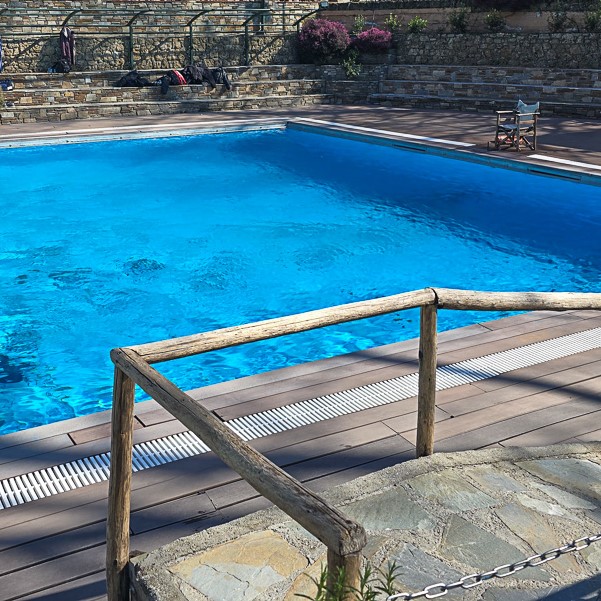
The facilities at Loutra Pozar offer several distinct ways to experience the thermal waters. The most popular choice for first-time visitors is the open-air pool and the natural waterfalls. Here, the hot water cascades over rocks into pools where you can sit directly beneath the falling stream, letting the warm current massage your shoulders and back. This waterfall hydro-massage has become the signature experience of Loutra Pozar, the image that draws people from across Greece and beyond. The setting amplifies the sensation. You sit in warm water while the cool mountain air moves through the gorge and the sound of the river mixes with the voices of other bathers.
For those seeking more privacy or a different atmosphere, the hydrotherapy centers offer indoor options. The Alexandria Hydrotherapy Center, sometimes called the Old Hydrotherapy Center, contains 48 individual baths, two indoor pools, and two small hammams. These private spaces allow for a more contemplative experience, away from the crowds of the outdoor areas. You can book a private tub for a set time, usually thirty minutes, and soak in solitude while steam rises around you. The newer facilities include six additional decorative pools with artificial waterfalls, added in the 2000s as part of an ongoing upgrade to the spa facilities.
Among the private options, experienced visitors often recommend booking tub number seven. This particular bath features a stone arch and generates especially good steam, creating a photogenic scene that captures the old-world character of the springs. The combination of the ancient-looking stonework and the rising vapor transports you back to the Roman or Ottoman eras when bathing held both social and spiritual significance.
Beyond the Pools
The gorge itself rewards exploration beyond the bathing areas. Paved paths lead upstream along the Thermopotamos, following the river into deeper sections of the canyon. You can find spots where the cold river water meets the warm spring water, creating natural hot-cold plunge experiences. Bathers sometimes move between the two, seeking the invigorating contrast that stimulates circulation and wakes up the body. Large plane trees cast their shade over the riverbanks, offering perfect spots for a riverside picnic . The sound of water flowing over stones provides a constant background music, a lullaby that slows your breathing and settles your mind.
Above the pools, steps climb toward a cave that overlooks the gorge. This area forms part of a speleological park, unique in Greece, where researchers have identified and mapped approximately fifteen caves within the boundaries of the thermal spring area. These caves hold interest for geologists, paleontologists, and archaeologists, containing evidence of the deep history of this landscape. Some of the findings from these caves are displayed in local museums, including the Natural History Museum in Aridaia.
Hiking trails radiate out from the springs, inviting longer explorations of Mount Voras and the surrounding forests. In winter, the nearby ski center of Kaimaktsalan offers alpine sports, making Loutra Pozar an ideal destination for combining mountain adventure with thermal relaxation. The springs operate year-round, and each season brings its own character. Winter bathers soak in warm water while snow falls around them, steam rising into the cold air. Summer visitors enjoy the cooling shade of the gorge and the contrast between the hot springs and the river.
Culture and Taste of the Region
The village of Loutraki, sometimes called Kato Loutraki to distinguish it from the older settlement higher on the mountain, has grown around the springs to serve visitors. Small shops sell local products, including the renowned cherries and apples of the region. On weekends, especially during summer, you might find stalls offering loukoumades, those Greek honey puffs that arrive hot and crisp from the fryer, dripping with honey and sprinkled with cinnamon and walnuts. The combination of warm pastry and sweet honey seems made to follow a soak in warm water.
Traditional Macedonian folk music sometimes fills the air on weekend afternoons, whether from a taverna speaker or live musicians celebrating a name day or festival. The region maintains its own cultural traditions, distinct from the better-known island cultures of Greece. Here, in the mountains of the north, you hear different instruments and different rhythms, music shaped by the history of this crossroads between worlds. The Pozar Festival, held each July, has grown into one of Greece’s significant music events, bringing larger crowds to the gorge for performances that range from traditional to contemporary.
Practical Wisdom for Your Visit
A visit to Loutra Pozar requires some planning to ensure you enjoy the experience fully. The springs operate on a ticketed system with designated time slots, typically thirty minutes for the main areas. You can rent towels and lockers on site, which saves you from carrying wet gear through the rest of your travels. The busiest hours fall between eleven in the morning and three in the afternoon on Saturdays and Sundays, when day-trippers from Thessaloniki and other cities pack the pools. For a quieter experience, visit on a weekday or arrive early in the morning.
You need to bring your swimsuit, a towel if you prefer not to rent, and shoes suitable for walking on wet stone surfaces. The paths around the pools can become slippery, so care is wise. A camera will serve you well, especially if you arrive in time for the morning light on the gorge walls. The springs do not permit pregnant women to bathe, and anyone with serious heart conditions should consult a doctor before visiting. Children under fifteen must remain with an adult at all times.
The approach road to Loutra Pozar passes through agricultural country before entering the gorge. Parking is available near the springs, and signs guide you from there to the ticket offices and changing areas. No shops exist within the immediate bathing area, so bring any snacks or water you might want during your soak, though cafes and restaurants operate nearby for after your bath.
Pairing Your Visit
Loutra Pozar sits within easy reach of several other destinations worth your time. The famous waterfalls of Edessa lie less than an hour away, offering their own spectacular scenery and the chance to explore one of Greece’s most historic cities. Edessa’s old quarter, with its traditional architecture and cobbled streets, rewards a few hours of wandering. The city was once the capital of the Macedonian kings, and its history reaches back even further than the springs.
To the west, the cafes of Florina invite you to sit and absorb the atmosphere of a classic Macedonian town. The region around Florina holds its own thermal springs and historic villages, making it a natural extension of a Loutra Pozar trip. Some visitors combine the springs with a visit to the ski center on Mount Voras, enjoying mountain recreation in the morning and thermal relaxation in the afternoon. The flexibility of the location, close to Thessaloniki yet feeling remote, makes it adaptable to many different itineraries.
As evening falls over the gorge, the character of Loutra Pozar changes again. The day-trippers depart, and the springs grow quieter. Night bathing offers a different magic, the warm water contrasting with the cool air while stars appear overhead. The cliffs darken, the sound of the river grows more prominent, and you float in water that has traveled through mountain stone to reach you. This is the oldest experience of Loutra Pozar, the one that drew those ancient Macedonian kings and will draw visitors for centuries to come. In the warm embrace of the springs, time softens, and you become part of a tradition as old as human presence in these mountains.

Tours that include this place
Greek Springs Waterfalls

Culture, cascades, and spa: Bitola’s landmarks, Florina coffee, Edessa’s roaring falls, then Loutraki’s forest hot springs. A restorative 12-hour day of gentle sightseeing, water, and wellness.
Pelister Loutraki Retreat

Active wellness day: Pelister pine hike with Hotel Molika coffee, Florina flavors, then Loutraki thermal pools set in forested hills. Ten indulgent hours balancing altitude, cuisine, and spa time.