
Edessa, Greece: Waterfalls, Varosi, History, and Why the City Deserves a Full Visit
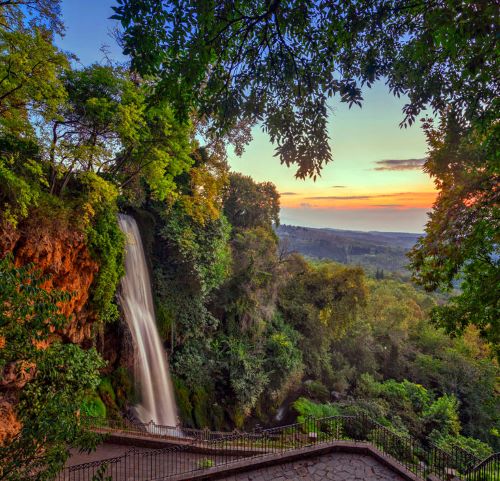
Edessa leaves a strong first impression because water shapes the city at every turn. You hear it before you fully see it. Streams cross the town, small bridges appear between streets and trees, and then the cliff edge opens into one of the best-known waterfall scenes in Greece. That is why Edessa carries the name “City of Waters” in official tourism material, and the title fits the place perfectly. Water here is not a decorative extra. It defines the city’s look, its sound, its history, and even the way visitors move through it.
Edessa also gives travelers something deeper than a quick waterfall stop. The city combines ancient roots, Byzantine memory, nineteenth-century neighborhoods, and an industrial story built on water power. You can stand behind the curtain of Karanos waterfall, then walk a few minutes to Varosi and see old Macedonian houses, churches, and museum spaces that explain how this city grew. That contrast gives Edessa its appeal. It feels natural and urban at the same time, with a strong local identity holding both parts together.
Where Edessa sits and why the landscape matters
Edessa stands in the Pella regional unit of Central Macedonia at about 320 meters above sea level, on the edge of the fertile plain below. Its position gives the city a natural drama that visitors notice right away. Water arrives from the higher ground and then breaks over the rocky edge near the city, creating the waterfall zone that has become Edessa’s signature sight. The surrounding plain matters too, because it links the city to orchards, agriculture, and the productive countryside that has supported local life for generations.
This geography also explains why Edessa feels greener and cooler than a standard inland stop. Official travel pages describe it as a city where rivers, streams, and waterfalls run right through the urban fabric. That close contact with water softens the city and gives it a more relaxed rhythm. Even a short walk can include shade, moisture in the air, and wide views over the plain. The setting creates beauty, yet it also explains how Edessa developed its industries, its neighborhoods, and its reputation as a place shaped by natural force.
A city with ancient roots and a long public life
Edessa’s story reaches far back into Macedonian history. The municipality’s historical overview says ancient tradition linked the city with the early Macedonian kingdom, and later Roman infrastructure brought the Via Egnatia through Edessa. That background matters because it places the city inside a much larger historical map. Edessa was never only a scenic stop. It stood on an important route, carried religious authority as a bishopric, and kept a role in regional life across centuries of change.
The same official history also shows how the city passed through Byzantine, Serbian, and Ottoman phases before entering the modern Greek state in 1912. That long sequence helps visitors understand why Edessa feels layered rather than uniform. Different eras left different marks. Some appear in the urban plan, some in church history, and some in the old quarters and surviving monuments. When you walk Edessa today, you move through a city that kept reshaping itself while still staying tied to its water and its position above the plain.
Water built the city’s industrial character
Edessa’s modern story makes even more sense once you see how water power shaped its economy. The municipal history states that the first textile factory opened in 1895 and that water, described as “white coal,” drove the city’s industrial growth. The same source says Edessa later gained a strong industrial profile in the decades between 1925 and 1940. This is a key part of the city’s identity. The waterfalls attracted visitors, yet the same water also turned mills, powered workshops, and supported real production.
That industrial legacy still shows clearly in the old mill area near the falls. Visit Central Macedonia explains that restored buildings in this zone now host thematic exhibitions and present the connection between water, landscape, and human work. The Open Air Water Museum grew from this setting. It gives visitors a simple and convincing lesson in how water moved from nature into daily life, food production, and local industry. In Edessa, the museum is not separate from the city’s story. It sits at the center of it.
Karanos waterfall gives Edessa its emblem
The city’s headline sight is Karanos waterfall, and it earns that status easily. Visit Greece states that Karanos measures 70 meters in height and is the biggest waterfall in Greece. The same official source describes the path that takes visitors behind the water curtain, where you can look out through the falling water toward the plain. This is the moment people remember from Edessa because it combines scale, movement, sound, and viewpoint in one place.
The wider Waterfalls Park adds depth to the visit. According to Visit Greece, the area includes landscaped paths, the double Lamda falls, and access onward to the Water Museum and aquarium. Official regional tourism pages also describe Edessa as a city of twelve waterfalls, even though only a smaller number stand out clearly for today’s visitor. That larger water network helps explain why the city feels so different from other towns in northern Greece. Edessa does not have one isolated cascade. It has an entire urban identity shaped by running water.
The practical side matters here as well. The walk behind Karanos brings you close to heavy spray, wet stone, and cooler air. A light jacket and shoes with grip make the visit easier in every season. These small choices improve the experience because the waterfall area invites slow movement, short stops, and repeated viewpoints rather than a rushed pass through. Edessa works best when you let the site unfold step by step.
Varosi adds texture, memory, and architecture
After the falls, Varosi gives Edessa its human scale. Visit Central Macedonia describes Varosi as the city’s first Christian district, formed from the Byzantine settlement that grew around the citadel and ancient city. The same source says the neighborhood was declared a traditional settlement in 1983 and that surviving houses date to the nineteenth century. These homes show classic Macedonian forms, with courtyards, upper balconies, tiled roofs, and a village-like intimacy within the city.
Varosi also carries memory from harder times. Regional tourism notes that German forces burned much of the district in 1944 because it had served as a resistance center. That detail gives the quarter emotional weight as well as visual charm. The restored houses and quiet lanes look gentle today, yet they stand inside a neighborhood that has known upheaval, rebuilding, and survival. This helps explain why a walk through Varosi feels more meaningful than a simple old-town stroll. The area holds architecture and history together in a very direct way.
The Kiupri Bridge adds another strong stop nearby. Visit Central Macedonia describes it as a 28-meter stone arched bridge that once lay outside the city as part of the route linked with the Via Egnatia. Today it sits inside a leafy urban setting with water, plane trees, and easy walking paths. The bridge is important because it turns Edessa’s history into something you can physically cross. It links route history, river landscape, and city life in a single compact monument.
Museums make Edessa easier to understand
The Open Air Water Museum should sit high on any Edessa plan because it explains why this city developed here and in this way. Municipal and regional sources describe restored flour mills, a sesame mill, and industrial buildings that interpret the role of water from preindustrial times into the early twentieth century. The exhibits stay close to the city’s real experience, so even visitors with limited background knowledge can follow the story. You move from the waterfall park into the machinery and immediately understand how nature became work, food, and economic growth.
The Folklore Ethnological Museum adds a second layer that complements the mills very well. Visit Central Macedonia says the museum sits in a 1932 neoclassical mansion in Varosi and presents daily life, customs, clothing, rural work, animal husbandry, sericulture, and textiles. This gives visitors a broader sense of how people lived in and around Edessa. The city’s story is not only about great views and industrial heritage. It is also about household life, local craft, and the social world of the surrounding countryside.
That museum also helps clarify one of the city’s quieter historical threads. Edessa’s folklore collections include sericulture and textile material, and the city’s municipal history highlights textile industry as a major part of modern development. Together, these sources show that cloth, thread, and silk-related work formed a real part of Edessa’s past, even if visitors today come first for the waterfalls. The museum gives that side of the city a proper voice.
What to taste and how to slow the visit down
Food around Edessa connects directly to the wider Pella plain. Visit Central Macedonia highlights Pella cherries as one of the region’s signature products and specifically names the variety “Tragana Edessis.” That link matters because it brings the city back to the fertile land below the cliffs. In spring and early summer, fruit, orchards, and local produce add another reason to linger. Even if you visit outside cherry season, the regional food story still deepens the experience and keeps Edessa tied to the landscape that supports it.
The city’s pace also suits a slower coffee stop. Water sounds, shade, and the short distances between sights make Edessa easy to enjoy without rushing. You can walk the falls, cross toward Varosi, pause by Kiupri, then move into a museum or café with very little strain. That gentle rhythm is one of Edessa’s strengths. The city offers enough substance for a full day, yet it stays compact and clear to navigate.
How to plan a smart Edessa itinerary
Train access makes Edessa practical for travelers coming from Thessaloniki. Hellenic Train lists the Thessaloniki to Edessa to Florina regional line, while its current service page notes that the Edessa to Florina section is temporarily served by buses. That means Edessa remains easy to reach by public transport, with onward regional connections still possible. For road travelers, the city also works well as a stop between the plain and the mountain areas farther northwest.
Edessa also pairs naturally with Loutra Pozar for a longer day. The official Pozar site presents the thermal baths as a licensed and certified thermal therapy unit with indoor and outdoor pools, waterfalls, and green surroundings. This pairing works because Edessa gives you urban history, waterfalls, and museums, while Pozar adds warm water, mountain scenery, and relaxation. Together they create one of the strongest day-trip combinations in this part of northern Greece.
Why Edessa deserves more than a quick stop
Edessa deserves time because it brings together natural force and human history in a very clear way. The waterfall scene gives the city instant appeal, yet the deeper reward comes from everything around it: the mill district, the old neighborhood of Varosi, the bridge, the museums, and the long civic memory carried through ancient, Byzantine, Ottoman, and modern periods. Few places explain themselves so well through a single element. In Edessa, water tells the story from beginning to end.
That is why Edessa stands out on any northern Greece route. It works as a short escape from Thessaloniki, a natural partner for Florina or Pozar, and a rewarding destination in its own right. If you give it more than a photo stop, the city returns much more than scenery. It gives you history you can walk through, industry you can understand, and a waterfall landscape that still feels fresh even after the first long look.

Tours that include this place
Macedon Ruins Circuit

Walk in Philip II’s footsteps: Bitola and Heraclea, Edessa’s waterfalls, Pella, and Vergina’s royal tombs. A 12-hour archaeology circuit linking mosaics, dynasties, and dramatic landscapes.
Greek Springs Waterfalls

Culture, cascades, and spa: Bitola’s landmarks, Florina coffee, Edessa’s roaring falls, then Loutraki’s forest hot springs. A restorative 12-hour day of gentle sightseeing, water, and wellness.
Florina Edessa Waterfalls

Florina cafés, Edessa waterfall spray, and Vergina’s royal tomb museum after a Bitola heritage warm-up. A 12-hour blend of Greek nature and history with photo stops and relaxed breaks.