
Thessaloniki: White Tower, Byzantine Monuments, Markets, Food, and the Best Way to See the City
Why Thessaloniki stays with people
Thessaloniki feels large enough to keep you curious and compact enough to learn quickly. The city opens onto the Thermaic Gulf, rises through layers of Roman, Byzantine, Ottoman, and modern history, and still moves with the energy of a working port and a major university city. Official city and tourism sources describe it as Greece’s second city, a cultural and business center for the north, and a place with more than 2,300 years of urban life. That long timeline matters because you can feel it in a single day. A waterfront walk leads to a Roman monument, then to a Byzantine church, then to a market stall, then to a late coffee that turns into dinner.
That mix gives Thessaloniki its real strength. Some cities impress through one landmark. Thessaloniki works through contrast and rhythm. The sea gives it openness, the old stones give it depth, and the neighborhoods keep the city lively from breakfast to late night. For travelers with limited time, that makes the city rewarding right away. For travelers who stay longer, it gives them a place that keeps unfolding street by street.
A city founded in 316 or 315 BC and shaped by every era after that
Thessaloniki traces its foundation to 316 or 315 BC. Official Thessaloniki tourism material says the city was founded in 316/315 BC and named after Thessalonike, sister of Alexander the Great and daughter of Philip II. UNESCO also dates the city to 315 BC and highlights its early role as a major base for the spread of Christianity. Those two facts explain a great deal about the city’s later history. Thessaloniki began with royal Macedonian roots, yet it soon developed into a strategic port, a commercial center, and one of the key urban hubs of the Byzantine world.
That long history also helps explain why the city feels layered rather than uniform. Roman Thessaloniki left behind the Galerian complex and the Rotunda. Byzantine Thessaloniki left churches, mosaics, monasteries, and walls. Ottoman Thessaloniki reshaped neighborhoods and trade. The Great Fire of 1917 then changed the center again and opened the way for a new urban plan by Ernest Hébrard, which still defines Aristotelous Square and much of the central layout today. You do not need to study urban history to notice this. A short walk through the center already shows how each era added something visible and lasting.
Start with the Roman and Byzantine core
The best first lesson in Thessaloniki stands near the center, where the Rotunda, the Arch of Galerius, and the Galerian palace zone sit close together. The Rotunda is one of the city’s great monuments and one of the important Roman buildings in Europe, while the Arch of Galerius, known locally as Kamara, commemorated Galerius’s victory over the Persians between 295 and 305 AD. These sites work well together because they show Thessaloniki before the city became known above all for its Byzantine identity. They also remain part of everyday life. Kamara still functions as a natural meeting point for locals, students, and visitors before a walk through the center.
From there, the Byzantine layer comes into focus almost at once. UNESCO lists fifteen early Christian and Byzantine monuments in Thessaloniki, including churches, monastic structures, and about four kilometers of city walls. Visit Greece calls the city an open museum, and that phrase fits. Thessaloniki was one of the great cities of Byzantium, and the surviving monuments still make that status easy to understand. For travelers, this means history here does not sit in one fenced zone. It lives across the city and keeps appearing during an ordinary walk.
The White Tower and the waterfront give the city its image
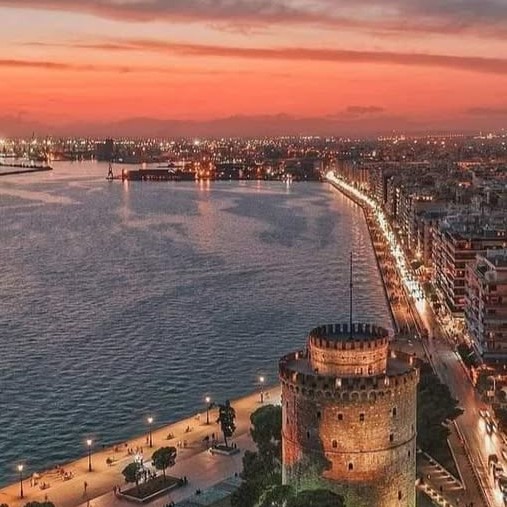
If the Roman and Byzantine monuments explain Thessaloniki’s depth, the White Tower explains its public image. Thessaloniki travel sources describe it as the emblem of the city. The tower was built in the late fifteenth century as part of the southeastern fortification line, and today it houses a museum that presents the city’s history from its foundation to the present. This makes the tower more than a photo stop. It is a useful starting point for anyone who wants a quick overview before heading into the rest of the city.
Just outside the tower, the city opens onto Nea Paralia, the long waterfront promenade that stretches from the White Tower toward the Thessaloniki Concert Hall. Thessaloniki tourism sources describe it as one of the city’s popular places for walking, running, cycling, and sunset views over the Thermaic Gulf. This is where Thessaloniki feels lighter. After churches, museums, and busy streets, the promenade gives you air, distance, and room to slow down. In the evening, it becomes one of the easiest ways to understand why locals stay attached to the city. Sea light, open space, and the skyline do the work without effort.
Ano Poli shows what the fire did not erase
To understand the city’s older texture, you need to climb to Ano Poli. Thessaloniki tourism calls it the balcony of the city, and the description is accurate. Ano Poli, or the Upper Town, escaped the Great Fire of 1917 to a large extent and kept its older street pattern, low houses, winding lanes, and strong views over the gulf. That survival matters because it lets visitors see a more intimate Thessaloniki, one closer to the city before the twentieth-century rebuilding of the center.
Ano Poli also connects directly to the city walls and the UNESCO monument landscape. From up here, Thessaloniki stops feeling flat and linear. You see how the old city climbed the slope, how the defenses held the ridge, and how the modern city later spread toward the sea. The area rewards a slow walk, a coffee, and a bit of time near the walls before sunset. It is one of the clearest places to understand Thessaloniki as both a fortified Byzantine city and a modern urban port.
The markets and food scene explain the city in another way
Thessaloniki’s food culture says as much about the city as its monuments do. The municipality’s gastronomy pages call the city a crossroads of flavors, and UNESCO has recognized Thessaloniki as the first Greek city in its Creative Cities Network for gastronomy. That recognition makes sense once you reach the markets. Kapani is the city’s oldest open public market, full of fish, meat, vegetables, olives, sweets, nuts, spices, and everyday urban noise. Modiano, the central covered food market, long served as one of the city’s social and culinary hearts and today combines produce stalls with tavernas, bars, and newer food concepts.
This is the right part of town for a slow food walk rather than a rushed meal. You can move from Kapani to Modiano, stop for small plates, then continue toward Ladadika, the old wholesale district near the port that now holds cafés, restaurants, and bars inside restored nineteenth-century buildings. Thessaloniki tourism describes Ladadika as a must for dining and nightlife, and it works especially well for a meze crawl because the area packs flavor, atmosphere, and late-evening energy into a small zone.
Morning belongs to bougatsa. Thessaloniki tourism traces the city’s bougatsa tradition to refugees from Constantinople after 1922 and describes it as one of the city’s favorite breakfasts and street foods. That gives a simple breakfast real historical weight. A slice of bougatsa and a coffee are not just a convenient start to the day. They connect the city’s food identity to migration, memory, and everyday habit. Later in the day, a frappé or freddo by the sea fits just as naturally. Regional tourism sources even describe Thessaloniki as the capital of frappé culture.
The museums add context that the streets alone cannot give
The Archaeological Museum of Thessaloniki deserves real time. Its own official site describes it as one of the largest museums in Greece and the central museum of northern Greece, with collections that cover Macedonia from prehistory to late antiquity. For visitors, this matters because the museum helps connect the city to the wider ancient Macedonian world. After a few rooms, the Roman monuments and early Christian remains outside become easier to place in a larger story.
A second essential stop is the Museum of Byzantine Culture, which presents eleven galleries on worship, daily life, architecture, trade, burial customs, and art across the Byzantine centuries. The museum won the Council of Europe Museum Prize in 2005, and Thessaloniki tourism still presents it as one of the country’s key museums. If the Archaeological Museum explains the ancient city, this museum explains why Thessaloniki mattered so deeply in the medieval eastern Mediterranean. Together, the two museums turn a city break into a much richer experience.
Jewish heritage and the memory of the city
Any serious look at Thessaloniki also needs to include Jewish history. The Jewish Museum of Thessaloniki and related research resources describe the city’s rich Sephardic heritage and the long presence of Jewish life in Thessaloniki. The museum, established in 2001, stands in one of the few buildings that survived the Great Fire of 1917 and serves as a center for memory and education on the city’s Jewish past. This part of Thessaloniki is important because it widens the story beyond churches and empires. It reminds visitors that the city also grew through trade, language, and community life shaped by Sephardic Jews over centuries.
The city’s Jewish monuments and museum visits bring emotional balance to the trip. Thessaloniki often gets described through food, nightlife, and seafront charm, all of which are real. Yet its deeper value lies in its full memory. A city that carries Roman arches, Byzantine walls, Ottoman traces, Sephardic heritage, and the scars of the twentieth century offers a more complex and more human kind of travel. That is one reason Thessaloniki keeps rewarding return visits.
How to move around and how to plan your time
For visitors, Thessaloniki works well because so much of the historic center sits close together. Official city itineraries suggest combining the Archaeological Museum, Rotunda, Kamara, the Galerian complex, the White Tower, and the waterfront in a single day. That route supports a simple conclusion: central Thessaloniki is very manageable on foot, especially if you group sights by area. When you need longer urban hops, OASTH buses cover the city with route, schedule, and stop information available through the official system. Summers can get very hot, with official practical information noting annual heat waves above 40°C, so October and November often make sightseeing easier and more comfortable.
A one-day visit can cover the Roman core, White Tower, waterfront, markets, and a meal in Ladadika. A weekend lets the city breathe. You can add the museums, Ano Poli, Jewish heritage sites, and a slower evening around Valaoritou, another nightlife district built from old commercial streets and warehouses. If you want to extend the trip beyond the city, official sources point to nearby escapes such as Vergina for the royal tombs and Halkidiki for beaches and coastal villages. That is part of Thessaloniki’s practical appeal. It works as a destination on its own and as a base for northern Greece.
Why Thessaloniki deserves more than a checklist
Thessaloniki deserves time because it offers more than headline sights. The White Tower gives you the symbol, the Rotunda gives you antiquity, the UNESCO churches give you spiritual and artistic depth, the markets give you daily life, and the seafront gives you room to breathe. Then the museums and Jewish heritage fill in the missing parts and turn a pleasant city break into a meaningful one. Official tourism sources often call Thessaloniki an open museum, and after a full day in the city that no longer sounds like a slogan. It sounds accurate.
For a traveler with limited knowledge of the city, the best advice is simple. Start early with bougatsa, walk the Roman and Byzantine core, head down to the White Tower and Nea Paralia, leave time for Kapani or Modiano, and finish with dinner in Ladadika or drinks in Valaoritou. That route gives you history, food, sea air, and the city’s social energy in the right order. Thessaloniki then does the rest on its own.
If you want a structured cross-border day in the city, explore Bitola to Thessaloniki: Seafront, Markets & Byzantine Walls.
