
Dojran, North Macedonia: Warm Lake Water, Layered History, and a Border Town with Its Own Rhythm
Dojran feels different from the first minute. The lake sits low, wide, and bright under the southeastern sky, and the shore moves at a gentler pace than the country’s better-known lake towns. People come here for warm water, easy swimming, fresh fish, and long evenings by the promenade, yet the place holds far more than a summer mood. Dojran carries a very long story shaped by prehistoric life, Paeonian settlement, Roman and Ottoman trade, and the violence of the First World War. Today that full history still shows in the lake, the ruined upper town, the restored clock tower, and the big church of St. Elijah above the shore.
What makes Dojran so appealing is the way all those layers sit close together. You can swim in shallow lake water in the morning, walk up to war-scarred monuments by late afternoon, and finish the day with fish and sunset at the waterfront. That mix gives Dojran a strong identity. It feels restful, yet it also feels educational. Travelers with limited knowledge of the region can understand a great deal here because the town explains itself through landscape, food, and visible remains rather than through long museum labels alone.
Why Lake Dojran Shapes Everything
Lake Dojran defines the whole place. The lake lies between North Macedonia and Greece and covers about 43.1 square kilometers, with a maximum depth of around 10 meters. That makes it shallow and warm compared with the country’s larger lakes, and official tourism material describes it as North Macedonia’s smallest tectonic lake. Because the water stays relatively shallow, the shore feels accessible and relaxed. Families can wade out easily, swimmers can enjoy gentler conditions, and the lakefront develops a social life that feels open and informal.
The setting adds even more character. Dojran sits on the western shore of the lake in North Macedonia’s southeast, while Belasica and surrounding hills frame the horizon. Scientific work on the lake’s climate shows Mediterranean influence reaching the basin through the Thessaloniki plain, which helps explain why Dojran often feels sunnier and softer than inland towns farther north. This geography creates the atmosphere visitors remember. The lake reflects a broad sky, reeds line the shallows, and the shore carries a light southern feeling that sets Dojran apart inside North Macedonia.
A Long History from Pile Dwellings to a Lake Town
Dojran’s past reaches far beyond the modern resort image. Archaeological work and regional historical material point to prehistoric life by the lake, including pile-dwelling settlements in the Dojran area. Europe House’s biodiversity overview also notes that the oldest recorded evidence of life by the lake goes back to the 5th century BC. That matters because it places Dojran among those Balkan lake landscapes where water shaped human settlement from a very early stage. People lived here because the lake offered food, movement, and a way of building life close to reeds and shallow water.
Greek historian Herodotus described the Paeonians of this region, and later development continued through the Roman and Byzantine eras. By the Ottoman period, Dojran had grown into a proper market town. Historical accounts describe a settlement with a bazaar, craft workshops, and houses arranged in a way that reminded visitors of Thessaloniki. That resemblance gave rise to the nickname “Little Solun” in local historical memory. Even if the grand urban form has faded, the idea still helps explain the town’s older ambition and its role as a lively trading center on a borderland route.
Then war changed everything. The Macedonian Front ran through the Dojran area during the First World War, and artillery fire shattered the old town and damaged key monuments. The scars of that period still define the historical landscape. In Dojran, war history does not sit in a remote archive. It remains visible in church walls, ruined structures, memorial routes, and the wider ridge lines around the lake. That direct link between scenery and conflict gives the town unusual depth.
The Landmarks That Tell Dojran’s Story Best
The lake itself is the first great sight. It gives Dojran its economy, its cuisine, its views, and its mood. Official tourism material presents Old Dojran as the resort heart, with beaches, cafés, and tavernas strung along the shore. That description feels right on the ground. A walk by the water quickly shows why visitors linger here. The lake stays close to daily life at every point, and even short distances open wide views across the borderland landscape.
Above the shore, the Church of St. Elijah gives the town one of its defining silhouettes. Local sources say local builders raised it in 1848 after a long struggle for a church that served the local community. Its position on a hill made it a dominant landmark from the start. During the First World War, shelling reduced it to a near ruin, and later recovery efforts turned it into both a spiritual site and a powerful reminder of the town’s losses. The church matters because it gathers faith, architecture, and memory in one place. When you stand near it, you can read both the beauty of the setting and the weight of history.
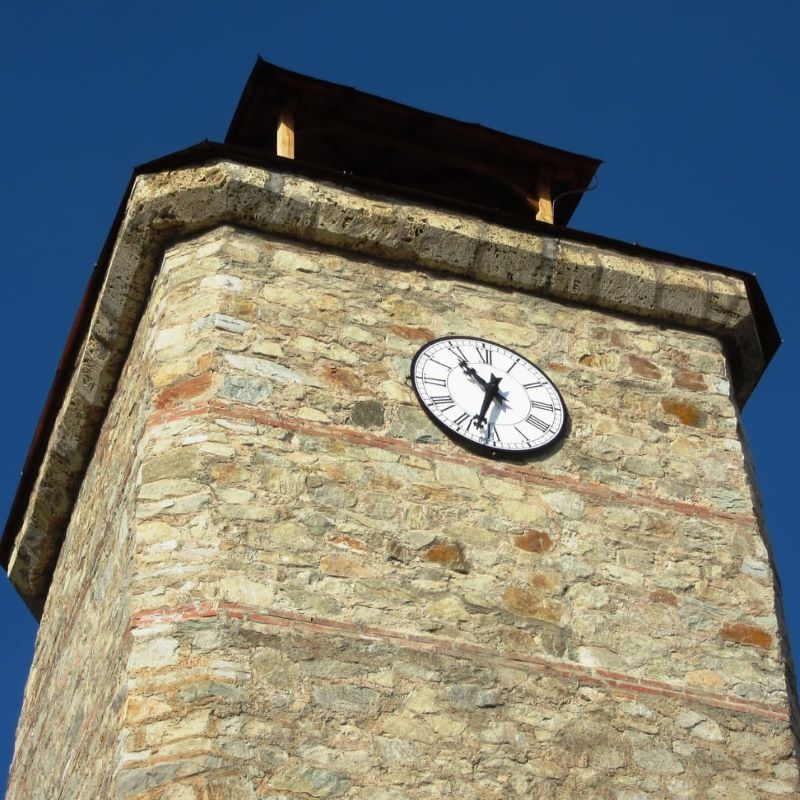
The clock tower adds another strong image. Historical and travel sources connect it with the late 14th century and with the Ottoman commander Gazi Evrenos. War later damaged it heavily, yet conservation work in recent years restored its more complete form. Today the tower helps visitors understand the older urban core of Star Dojran. It anchors the upper town and reminds you that this quiet lakeside destination once had a more complex civic and commercial life. Close by, the remains of the old hamam extend the same Ottoman story. Sources place the bath in the upper part of Dojran and state that it remained in use until 1916. Together, the tower and hamam preserve the outline of the old town’s public life.
Another ruined church, St. George in Star Dojran, adds one more layer to the upper town’s sacred landscape. Wikimedia Commons data lists its inception as 1911, which aligns with local memory of a once-active church in the old settlement. Even in ruin, sites like this matter because they help explain how full and structured old Dojran once was before war broke the town apart. The visitor does not need a complete monument to understand its force. The ruins themselves already speak clearly.
A Town Where Fishing Became Culture
Fishing lies at the heart of Dojran’s identity. North Macedonia Timeless describes the lake as famous for its traditional fishing with birds and reed fences, the so-called mandras. In this method, fishermen create enclosed water spaces with reeds and use birds, especially cormorants in older practice, to drive fish into traps. Europe House also highlights this method as one of the rare fishing traditions of its kind in the world. That matters because Dojran’s lake culture did not grow around generic beach leisure alone. It grew around an old, highly local system of knowledge, labor, and adaptation to shallow reed-fringed water.
That tradition also reaches the table. Culinary sources describe fish on reed, or riba na trska, as a classic Dojran specialty. The dish keeps the connection between the lake and the kitchen very direct. Visitors still come here expecting carp, catfish, and local freshwater fish cooked in simple, place-specific ways. A meal by the shore therefore becomes part of the education of the trip. You are not just eating near the lake. You are tasting a local system of life that has shaped Dojran for centuries.
Summer Life, Mud, and the Lakeside Evenings People Remember
Modern Dojran works especially well as a place to slow down. Tourism material highlights beaches, open-air dining, mineral-rich mud, and easy lakefront relaxation. Regional development documents also mention Dojran’s medicinal mud as one of the place’s signature natural assets. Together, these sources show why the town draws visitors in the warmer months. The lake invites swimming, kayaking, paddleboarding, and short boat outings, while the mud and warm shallows add a health-and-wellness angle that feels rooted in the lake itself rather than in a separate spa complex.
Evening brings out Dojran’s best mood. Old Dojran’s promenade fills with walkers, lakeside tables, and the warm light that falls across the west shore at day’s end. The town’s layout helps here. Water stays in view for long stretches, and the pace remains easy. Instead of rushing between separate districts, you move from swim to coffee to dinner within one continuous lakefront setting. That continuity gives Dojran a calm, cohesive charm.
Walking the War Landscape Around Dojran
The First World War also left a wider battlefield landscape around the lake, especially on the southern and eastern approaches near the present border area. The Commonwealth War Graves Commission describes the Doiran Memorial in nearby Greece as both a battlefield memorial and a memorial to the missing, placed near the site of fierce fighting in 1917 and 1918. Historical records of the Battle of Doiran underline the scale of those clashes. For visitors today, this means the hills and viewpoints around the lake carry more than scenic value. They also hold memory of one of the key sectors of the Macedonian Front.
Travelers interested in military history often look for viewpoints linked with the old front line, including the so-called Devil’s Eye area mentioned in battlefield tourism references. I cannot confirm a single current official visitor guide for that viewpoint, so I would treat route details there with care and check local guidance on arrival. The wider point still stands clearly. Around Dojran, the landscape itself functions as a historical document. Hills, trenches, memorials, and ruined urban fabric all remain part of the same story.
How to Plan a Strong Visit
Dojran works well in several formats. A half-day visit can cover the lakeshore, a swim, the Church of St. Elijah, and the clock tower. A full day gives you time for a proper lake meal, a longer upper-town walk, and some battlefield context around the broader Dojran area. With two days, you can settle into the lake rhythm more fully and add a short cross-border or Gevgelija-based extension. Geography makes this easy enough. Dojran lies about 30 kilometers from Gevgelija and the Greek border area, while the road network links it comfortably with southeastern North Macedonia.
Season matters too. Official tourism sources present the warmer period as Dojran’s classic season, and that fits the lake’s character. Late spring through early autumn brings swimming weather, busy waterfront evenings, and the best chance to experience the town in its full social rhythm. A car helps a lot because it gives you easier access to upper-town remains, lakeside stops, and the wider historical landscape. Cash also remains useful in smaller places around the lake.
Why Dojran Stays with People
Dojran leaves a strong impression because it does several things at once without strain. It offers warm lake leisure, a rare fishing tradition, rich borderland history, Ottoman traces, sacred architecture, and the memory of a major war front. Very few towns hold all of that within such a small and readable setting. The visitor can understand the place through water, taste, and walking pace while still finding plenty of historical depth.
That is the real strength of Dojran, North Macedonia. It feels easy to enjoy, yet it also rewards closer attention. Come for the lake, the fish, and the sunset if you like. Stay long enough, and the town reveals a much fuller identity shaped by old settlement, trade, devotion, and survival. That layered character is what makes Dojran memorable long after the drive home.
For a full day that combines archaeology, wine, and lakeside time, take a look at Stobi Mosaics, Winery Tasting & Lake Dojran Stroll.
