
Lake Dojran, North Macedonia: History, Things to Do, Food, and Travel Tips
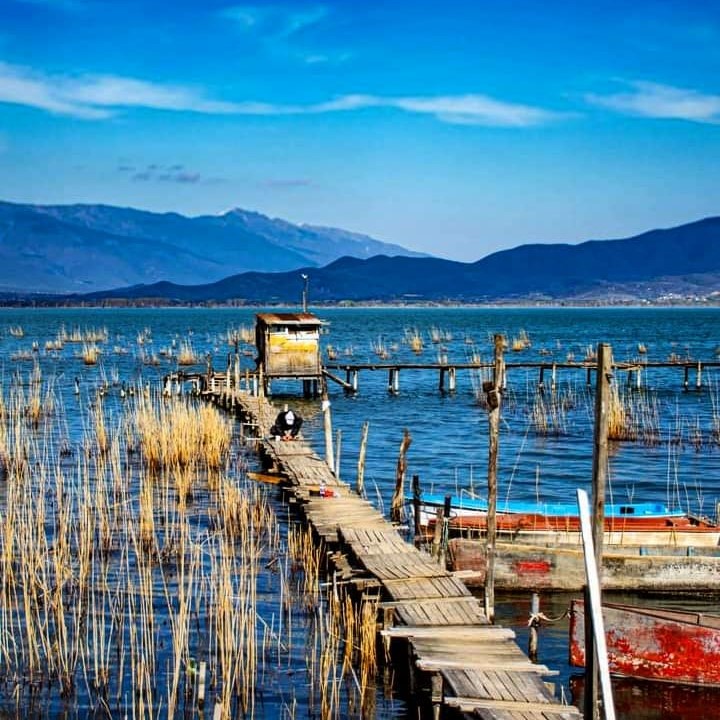
Lake Dojran sits in the far southeast of North Macedonia, close to Greece, and it offers a very different lake experience from Ohrid or Prespa. The water stays shallow, the air feels softer, and the whole shoreline moves at a calmer pace. North Macedonia and Greece share the lake, and that border setting gives the area a distinct identity. Official tourism and environmental sources describe Dojran as a shallow tectonic lake with a Mediterranean feel, warm summers, mild winters, and water that heats quickly because the basin reaches only about 10 meters at its deepest point.
Why Lake Dojran Feels Different
Travelers often reach Dojran and notice the atmosphere before they notice the landmarks. The shore feels open, the reeds shape the horizon, and the lake seems to stretch wide rather than deep. That physical character matters because it shapes every part of the destination, from swimming and fishing to food and local memory. Europe House and North Macedonia tourism sources describe the lake as eutrophic, shallow, and biologically rich, while tourism pages highlight the warm water and the sub Mediterranean climate around the basin. In simple terms, Lake Dojran offers an easier, warmer, more laid-back lake day, especially from summer into early autumn.
A Shoreline with Deep History
Lake Dojran carries a long human story. Sources that summarize the area’s history trace settlement here back to prehistory, and Herodotus wrote about Paeonians who lived by lake waters in boat-linked communities and relied on fishing, hunting, and daily life tied closely to the shore. Later periods brought stronger urban growth. Europe House notes that the settlement developed further in the Roman era, gained the Byzantine name Polin, and then grew into a small market town after Ottoman rule reached the area. That long arc matters because Dojran never grew out of the lake. The lake shaped the town from the start, and the town kept answering back through fishing, trade, and lakeside settlement.
Ottoman heritage still gives Old Dojran part of its character. The old bathhouse and the clock tower connect the town to that layer of history, and recent conservation work helped keep those symbols visible. That means a walk through Star Dojran gives visitors more than beach time. It also gives them a sense of an older town that once linked trade, bathing culture, and lakeside daily life in one compact place. For readers with limited background, that is the key point. Dojran is not only a summer stop. It is a historic border town whose life has always depended on water, movement, and exchange.
Geography That Shapes the Experience
Lake Dojran works so well as a leisure destination because geography does a lot of the work. The lake covers about 43 square kilometers, lies at roughly 148 meters above sea level, and sits between surrounding hills and the southern opening that brings Mediterranean influence inland. Europe House reports an average depth of about 6.7 meters and a maximum depth of 10 meters, while North Macedonia Timeless highlights hot, dry summers and mild, wetter winters. That mix creates warm bathing conditions and gives the place a softer climate than travelers often expect in inland North Macedonia.
This same geography also shaped the lake’s ecology. Because the basin stays shallow and nutrient rich, Dojran supports strong biological activity, a wide fish stock, reed zones, and important bird habitat. Europe House notes that the lake and its coastline hold protected status in North Macedonia, while Ramsar lists it as a shallow eutrophic lake of international wetland value. For visitors, that adds an educational layer to the trip. You can enjoy the beach and still understand why this landscape matters beyond tourism. It is a living wetland with cross-border ecological value.
What to See Around Star Dojran
Star Dojran usually gives first-time visitors the clearest sense of place. Here you can walk the waterfront, look out across the reed belt, and move between beach spaces, old-town traces, and views toward the Greek side of the lake. Local tourism pages point visitors toward the old Turkish bath, the clock tower area, and the shore itself as the core of the experience. That makes Star Dojran a strong base for people who want easy walking, local food, and lake views in one compact zone.
The mud shoreline also belongs in the Dojran story. Tourism pages describe Dojran for its mineral-rich mud, and that feature has drawn visitors for years. It gives the lake a spa-like identity, though the bigger point for travel writing is simpler. The mud, the warm water, and the reeds create a shoreline experience that feels different from a mountain lake or a river beach. In Dojran, the shore itself becomes one of the sights.
The War Landscape Still Lives on the Hills
World War I changed Dojran forever. Official tourism material states that the town suffered heavily on the Macedonian Front, and the hills around the lake still carry trenches and memorials from that period. On the Greek side, the Commonwealth War Graves Commission maintains the Doiran Memorial and Doiran Military Cemetery, both tied to the fierce fighting that took place here in 1917 and 1918. For visitors, that means the lake holds two moods at once. At water level, you see beaches, fishing houses, and quiet promenades. On the surrounding heights, you meet one of the Balkans’ important First World War landscapes.
That contrast gives Dojran unusual depth as a destination. A family can come for a swim, lunch, and evening walk, while a history-minded traveler can connect the same landscape to the Macedonian Front and to memorial sites around Doirani and Kilkis. The nearby Greek side preserves routes and museums tied to that wartime memory, including the Doirani Memorial area and the museum at Skra. As a result, Lake Dojran works well for readers who want a place that combines leisure, history, and a wider regional story in a single trip.
Traditional Fishing Gives Dojran Its Identity
No part of Dojran feels more local than its fishing heritage. Official tourism pages describe the lake’s reed-and-stake fishing installations as daljans, while other cultural and environmental sources explain the mandra system in more detail. The core idea stays the same. Fishermen used reeds, fences, and bird movement to guide fish into controlled spaces near the shore. Europe House and North Macedonia Timeless both describe this as one of the rare traditional fishing practices of its kind in the world.
This tradition matters for more than tourism branding. It shows how closely Dojran life grew from the specific conditions of the lake. The reeds, the shallow water, the fish stock, and the birdlife all shaped a working system that local people refined over generations. Even if a visitor sees only the remaining structures or hears the story over lunch, the method explains why Dojran feels rooted. It carries a working lake culture, not only a resort image. That gives the destination its strongest narrative edge in travel writing.
Food, Summer Rhythm, and Local Culture
Food in Dojran starts with fish, and local culinary writing presents the lake catch as the center of the regional table. A North Macedonia Timeless food publication highlights fish prepared on cane, in casserole, in stew, in soup, and in pies, while tourism pages keep pointing visitors back to fresh lake fish and relaxed meals by the water. Carp stands out in the local identity, and the whole food scene fits the setting. Warm evenings, lake views, and simple fish dishes give Dojran a strong sense of place.
Culture here follows that same lakeside rhythm. Summer events, local promenades, and open-air life along the shore shape the feel of the town. At the same time, the border location keeps Greece present in the background, both geographically and historically. You do not need deep regional knowledge to feel that influence. You see it in the map, in the memorial landscape, and in the easy logic of pairing the lake with nearby stops on either side of the border. Dojran feels local and cross-border at the same time, and that balance gives it real character.
Practical Travel Tips and Easy Pairings
Lake Dojran works best for travelers who want an easy road trip. Official tourism sources place it about 170 kilometers from Skopje, and route planners place Gevgelija roughly half an hour away by road. That makes Dojran simple for self-drive visitors coming from the capital, the south, or the border corridor. Once you arrive, the main pleasure comes from slowing down. Walk the shore in Star Dojran, stop for fish, spend time by the water, and leave room for a second site on the same day.
For itinerary building, two pairings make strong sense. From central North Macedonia, Stobi adds a powerful archaeological contrast because the national institution describes it as the old city of Stobi at the meeting point of the Crna and Vardar rivers and as a site of national importance. From the south, the Doirani and Kilkis memorial zone in Greece adds the wartime layer that completes the lake’s First World War story. In other words, Dojran can anchor a beach and food day, or it can serve as the scenic center of a broader cultural route.
Why Lake Dojran Deserves More Attention
Lake Dojran rewards travelers who enjoy places with a clear identity. The lake gives you warm water, reeds, fish culture, and easy views. History gives you Paeonian roots, Ottoman traces, and the heavy memory of the Macedonian Front. Nature adds protected wetland value and birdlife. Put together, those layers make Dojran feel fuller than its quiet image first suggests. It is a destination for swimming, walking, learning, eating, and understanding how landscape can shape a town across centuries.
To add Dojran Lake to a wider day trip with history and wine, check Stobi Mosaics, Winery Tasting & Lake Dojran Stroll.
