
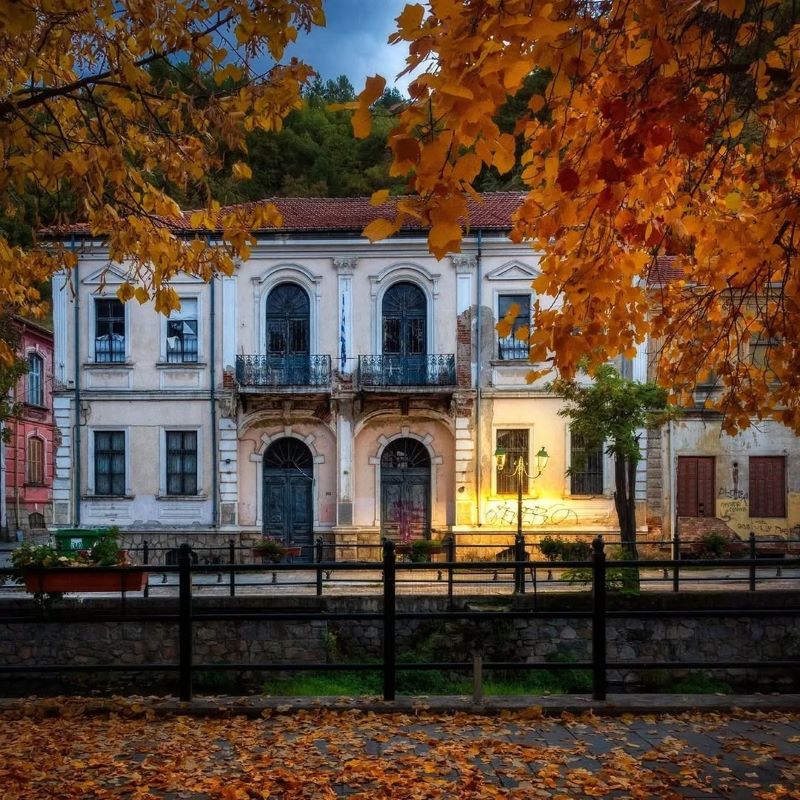
Florina: Riverside Architecture, Museum Culture, and Why This Northern City Stays With You
Why Florina feels different from the Greece people expect
Florina surprises people because it changes the usual picture of Greece almost at once. Instead of islands, bright ports, and summer heat, you find a northern city shaped by a river, winter air, mountain horizons, and a quieter rhythm. The Sakoulevas River cuts through the city center, and rows of old houses, bridges, and riverside walks give the place a calm and elegant character. Visit Greece describes Florina as a beautiful capital crossed by a river, while the city’s riverside area appears again and again in tourism material as the part that leaves the strongest first impression.
That first impression matters because it explains why Florina works so well for travelers coming from Bitola, Prespa, or Kastoria. The city sits high for Greece, at roughly 687 meters above sea level, inside a wooded valley near the northern border. That altitude, together with the surrounding mountains, gives Florina a cooler climate and a sharper seasonal feel than places farther south. Winter brings snow, fog, and long cold spells, while spring and autumn light up the riverbanks and old facades in a softer way. January brings the year’s heaviest snowfall, and February often keeps the winter mood alive.
Where Florina sits and how geography shapes the city
Geography explains a great deal about Florina’s personality. The city lies in Western Macedonia, near the routes that connect northern Greece with North Macedonia and the inland lake districts farther west. It also works as a gateway toward the Prespa Lakes and the older Kastoria route, which gives the city a useful position for travelers moving across the region. This setting helped Florina grow as a service and market center, and it still shapes how visitors use the city today, whether they arrive for a short coffee stop, an overnight stay, or a museum visit between longer drives.
The nearby mountains add another layer. Visit Greece describes Florina as an ideal base for winter sports and excursions in nature, while regional travel material highlights the wider alpine character of the area. Ski terrain sits within easy driving reach, and GTP places the Pisoderi ski area about 18 kilometers from Florina. That means the city functions as both an urban stop and a mountain gateway. You can spend the morning by the river with coffee and museums, then head toward snow, forest, and higher ground in the afternoon. That contrast gives Florina its range.
How history, trade, and the railway gave Florina its urban character
Florina’s history helps explain why the city looks the way it does today. Britannica describes it as a place with Byzantine roots that later passed under Ottoman control, while later history tied it to the shifting politics of the Macedonian region and the frontier changes that followed the Balkan Wars. The city passed to Greece after those wars, and its location near the border gave it strategic weight in the years that followed. That borderland character still shapes the feel of Florina. It is a Greek city, yet it also reads as a meeting point of routes, identities, and regional histories.
The key turning point for the modern city came with the railway. Visit Greece states that Florina experienced a strong cultural and economic uplift around 1893 through its rail connection with Thessaloniki. That rail link helped bring trade, movement, and new confidence into the city, and the results still show in the built environment. Early twentieth-century eclectic and neoclassical buildings line parts of the river and inner streets, giving Florina a richer and more urban face than travelers often expect in a mountain-border town. When you walk the center, you can still read that period of growth in the facades, proportions, and city layout.
Commerce also helped shape local life. Florina grew as a market town for grain, grapes, vegetables, and regional goods, and Britannica notes that the city also became known for textile production and fine leather handicrafts. That matters because it places Florina inside the story of inland northern Greece rather than seaside tourism alone. This city grew through exchange, agriculture, craftsmanship, and transport. Even today, that older economic logic survives in the way food, local products, and cross-regional movement remain part of the city’s everyday identity.
The Sakoulevas riverfront gives Florina its everyday beauty
The best way to understand Florina is to walk beside the Sakoulevas. Visit Western Macedonia recommends a stroll on the riverbanks and points to the picturesque traditional houses that line the water. The river gives the city its shape and its pace. It creates room for bridges, seating areas, photographs, and slow wandering, and it softens the urban landscape with the sound and movement of water. In a city that carries history, snow, and mountain weather, the river adds warmth and human scale. It invites you to pause rather than rush.
The riverside also explains Florina’s strong coffee culture. Visit Greece’s city guide suggests starting the day with a walk along the water, followed by coffee in one of the bars near the bank. That recommendation feels exactly right on the ground. The city’s coffee stop is part of the visit rather than a break from it. You sit close to the river, watch the light on the facades, and feel the city move at a steady northern pace. In winter, this ritual feels even stronger because the cold air outside makes the warm interior of a café feel like part of Florina’s character.
Cinema adds another layer to the riverfront. Visit Greece notes that director Theo Angelopoulos used Florina as a setting for some of his films, and regional tourism material points out that the traditional riverside houses appeared in his work. That film connection matters because it captures something true about the city. Florina already looks cinematic. The river, the bridges, the long winter light, and the old houses create a setting that feels reflective and full of atmosphere. Angelopoulos did not impose that mood on Florina. He recognized it.
The museums give Florina depth beyond the view
Florina rewards travelers who want culture as much as scenery. The Archaeological Museum, located near the railway station, presents finds from across the Florina regional unit and covers a long span from the Neolithic era to Byzantine times. Official museum sources and the regional tourism page both emphasize this broad historical range. That makes the museum a smart first stop because it gives context to the wider landscape around the city, from early settlements to Roman sculpture and Byzantine material from the Prespa area. In simple terms, it shows that Florina sits inside a much older human story than the riverfront alone suggests.
The Museum of Contemporary Art gives the city a very different kind of cultural strength. Visit Greece describes it as one of the important art institutions in Greece, housed since 2006 in a neoclassical building next to the Sakoulevas River. The same source says its permanent collection includes around 700 works by Greek and foreign artists. This museum matters because it proves that Florina’s cultural life extends well beyond local history. The city has built a serious modern art profile, and the museum gives that identity a visible home right in the urban core.
There is also an art link built into the railway area itself. Visit Greece notes that one of the old station buildings houses an Art Gallery with works by local artists. That detail ties together two central themes of Florina, rail history and visual culture. The railway helped modernize the city, and the arts became one of the ways Florina expressed that modern identity. For a visitor, this makes the station district more than a transport point. It becomes part of the city’s cultural map.
What to eat and drink in Florina
Food in Florina follows the same logic as the city itself. It is grounded, regional, and closely tied to place. The best-known local ingredient is the Florina red pepper, a sweet long pepper associated with the area and widely used in spreads, roasted dishes, and meze. Florina’s economy still includes the sale of local vegetables, including Florina peppers, and producers in the region describe pepper-based products as central to local gastronomy. This gives travelers an easy and memorable entry point into the city’s food culture. A small plate of roasted Florina peppers, a pepper spread, fresh bread, and coffee by the river already feels like a full Florina moment.
This is also where the city’s café rhythm becomes part of the food story. Florina does not ask for a rushed meal plan. It encourages a slower pattern of coffee, a riverside walk, a few small plates, and time to look around. That slower pace suits the city perfectly. It allows the architecture, weather, and conversation to become part of the experience. In practical travel terms, Florina works especially well as a half-day stop because a simple sequence of river walk, coffee, museum, and pepper meze already delivers a satisfying sense of the place.
Winter culture, trains, and how to plan your stop
Florina’s cultural calendar adds another reason to visit in the colder months. The Florina International Film Festival launched as a February event focused on short fiction and documentary storytelling, giving the city a fresh winter cultural anchor. That newer festival fits Florina well because the city already carries a strong visual and reflective atmosphere through its river, film heritage, and art institutions. A winter city feels richer when it offers a museum by day and a film screening by evening, and Florina increasingly fits that pattern.
Rail access also remains part of Florina’s appeal. Hellenic Train lists the Thessaloniki to Edessa to Florina regional line and current timetable material shows services through stations including Edessa and Amyntaio. That makes Florina one of the Greek border cities where rail still shapes visitor planning in a direct way. Travelers coming from Thessaloniki can reach the city by regional service, while drivers moving between Bitola, Florina, and Kastoria can use Florina as a useful coffee and museum stop in the middle of a broader northern Greece route. In January and February, warm clothing and flexible timing help a great deal because snow, fog, and freezing conditions are part of the city’s winter reality.
Why Florina earns more than a quick stop
Florina earns more than a quick border pause because it holds several identities together with unusual ease. It is a riverside city, a rail city, an art city, and a mountain gateway at the same time. Its history runs from Byzantine and Ottoman layers to railway growth and frontier politics. Its daily life still revolves around coffee, walking, food, and the changing mood of the Sakoulevas. Few places in northern Greece combine that much depth with such an approachable scale.
For travelers starting in Bitola or crossing Western Macedonia by road, Florina gives substance as well as convenience. You can arrive for a coffee stop and leave with a fuller sense of the region’s culture, architecture, and modern identity. You can visit for a short riverside walk and end up staying for museums, peppers, art, and the feel of a city that wears winter well. That is Florina’s strength. It gives you beauty, context, and a clear local character, all within a city center that remains easy to explore at a human pace.

Tours that include this place
Pelister Florina Escape

Pelister peaks to Greek cafés: Bitola heritage, pine-forest drive to Hotel Molika, then an easy border hop for riverside espresso and boutiques in Florina. Culture, nature, and coffee breaks.
Greek Springs Waterfalls

Culture, cascades, and spa: Bitola’s landmarks, Florina coffee, Edessa’s roaring falls, then Loutraki’s forest hot springs. A restorative 12-hour day of gentle sightseeing, water, and wellness.
Florina Kastoria Lakeside

Elegant Greek day out: Florina markets and cafés, then lakeside Kastoria with Byzantine chapels, mansions, and trout lunch. Cross-border architecture, history, and reflections on Lake Orestiada.
Florina Edessa Waterfalls

Florina cafés, Edessa waterfall spray, and Vergina’s royal tomb museum after a Bitola heritage warm-up. A 12-hour blend of Greek nature and history with photo stops and relaxed breaks.