
Kastoria, Greece: Byzantine Heritage, Fur History, and a Lakeside City Worth Slowing Down For
Kastoria stands apart from the Greece that first comes to mind for a lot of travelers. Instead of islands and whitewashed ports, you find a calm northern city wrapped around a lake, framed by mountains, and shaped by church domes, stone mansions, and quiet waters. The setting gives Kastoria its first layer of beauty, but the deeper appeal comes from the way history, landscape, and daily life still fit together. You can walk by the lake in the morning, step into a Byzantine church before lunch, and end the day looking across the whole peninsula from the hills above town.
Where Kastoria sits and why the landscape feels so unusual
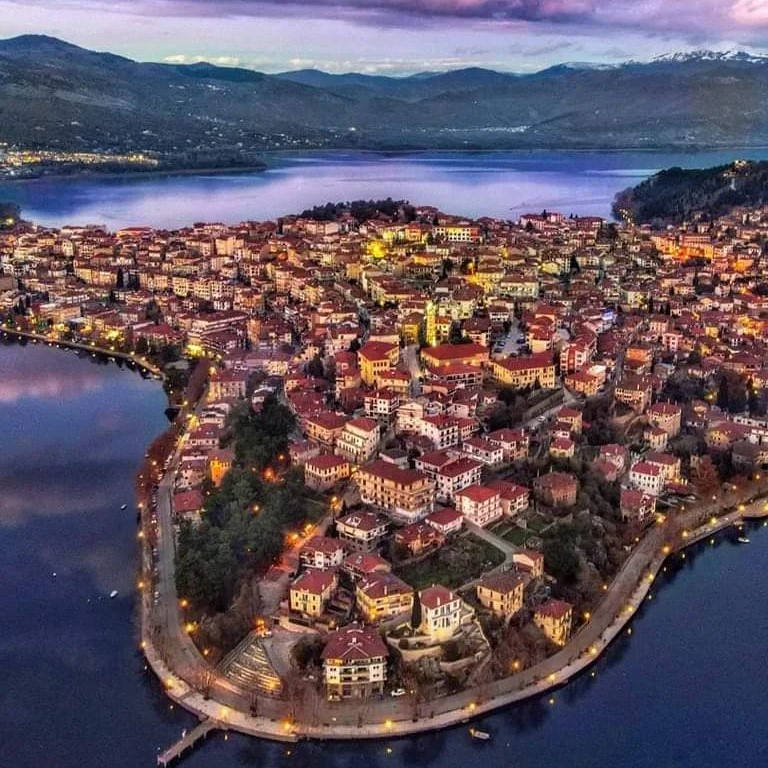
Kastoria rises on a narrow peninsula that pushes into Lake Orestiada in western Macedonia, between the mountains of Grammos and Vitsi. Visit Greece describes the city as built on the hillside around that peninsula, which helps explain why Kastoria feels both open and enclosed at the same time. Water surrounds the city on several sides, while mountain slopes close the horizon. This gives the town a quiet, protected look, and it also makes even a simple walk feel scenic.
The lake itself adds another layer of interest because its geology is older and richer than a quick glance suggests. Local Kastoria sources describe Lake Orestiada as a karstic, tectonic lake and a remnant of a much larger ancient body of water. In other words, the lake is not just a backdrop for photographs. It is the natural core around which the city formed, and it has shaped settlement, trade, birdlife, and daily movement for centuries.
A city shaped by Byzantium, faith, and long commercial links
Kastoria carries deep Byzantine roots. Britannica notes that the city later became a center with dozens of Byzantine and medieval churches and that it still serves as the seat of a metropolitan bishop. That religious importance helps explain why Kastoria holds such a strong church landscape today. This is not a city with one celebrated monument and little else around it. It is a place where Byzantine faith and urban life grew side by side over a long period.
Trade shaped the city just as strongly. Kastoria built its name over centuries through fur craftsmanship, and tourism sources still describe it as famous across Greece and beyond for that tradition. Visit Greece points travelers toward the old neighborhoods of Doltso and Apozari, where grand houses from the seventeenth and eighteenth centuries reflect the period when the city prospered through fur trade. Discover Greece adds that Kastorian furriers developed workshops and showrooms linked to major European cities. That older commercial confidence still shows in the built fabric of the city.
The old neighborhoods give Kastoria its human scale
Doltso and Apozari matter because they show what wealth and urban taste looked like in Kastoria at its height. Visit Greece describes Doltso as a picturesque quarter with buildings from the seventeenth and eighteenth centuries, while Apozari stands as another old aristocratic neighborhood with mansions and Byzantine churches. These areas give the city texture. You move from lakeside calm into lanes where wood, stone, enclosed courtyards, and upper floors tell the story of merchant life in a prosperous inland town.
This is where Kastoria starts to feel more personal than monumental. The city does not depend on a single grand square or one headline attraction. Its appeal comes from the way its pieces connect. A church appears near a mansion. A lakeside path opens after a dense old quarter. A fur showroom sits inside a stone building that already looks like part of the city’s story. That rhythm makes Kastoria rewarding for travelers who like walking, looking closely, and learning through place rather than through spectacle alone.
Panagia Koumbelidiki shows the Byzantine soul of the city
If you want one site that captures Kastoria’s Byzantine identity, Panagia Koumbelidiki is the clearest choice. Discover Kastoria describes it as a symbol of the city and one of its key Byzantine monuments. The church stands inside the acropolis of the Byzantine castle and dates to the middle of the eleventh century, with later additions and layers of painted decoration from several centuries. Its high dome gave it the name Koumbelidiki, derived from the Turkish word for dome.
The church also works well for visitors with limited background knowledge because it makes Byzantine art easier to read. Its frescoes include scenes from the life of the Virgin Mary, and the building itself carries the layered look of a monument used, altered, and restored across time. You do not need specialist knowledge to feel its importance. The brickwork, proportions, and surviving painted surfaces already tell you that Kastoria once stood inside a rich religious world with strong artistic ambition.
Dragon’s Cave adds mystery, geology, and a change of mood
From churches and mansions, Kastoria moves easily into geology. Dragon’s Cave sits on the north side of the city near the lakeside road and close to Panagia Mavriotissa. West Macedonia tourism describes it as one of the area’s standout natural sights, while the cave’s official site highlights its underground lakes, halls, corridors, stalactites, and stalagmites. The visit changes the mood of the day because the focus moves from urban history to subterranean space, sound, and water.
The cave also connects beautifully with the lake outside. Visit Greece notes that while touring the lake, visitors can stop at Dragon’s Cave and see seven underground lakes and impressive chambers. That link matters because it shows how tightly Kastoria’s sights connect with one another. You do not leave the city’s identity behind when you visit the cave. You simply encounter the lake in a different form, hidden under rock rather than spread across the open shore.
Dispilio takes the story of Kastoria far deeper into time
Kastoria’s historical reach extends well beyond Byzantium. Eight kilometers from the city, Dispilio opens a window into Neolithic Europe. Visit Greece describes it as the oldest Neolithic settlement in Europe and explains that traces of wooden stakes appeared when the lake level dropped in 1932. Excavation later revealed a large and organized lakeside settlement, along with finds that changed the study of prehistory in Greece.
What makes Dispilio especially valuable for travelers is that it turns prehistoric life into something visible and understandable. Visit Greece explains that the archaeological park includes reconstructed huts based on excavation evidence, and Greek Travel Pages notes that the open-air museum grew alongside the archaeological work and continues to operate near the original site. This means a visit to Dispilio is not just about reading a sign beside ruins. You can move through a reconstructed environment and gain a clearer picture of how people lived by the lake thousands of years ago.
Lake Orestiada is more than scenery
Lake Orestiada gives Kastoria beauty, but it also gives the city ecological depth. Visit Greece says the lake hosts about 200 bird species, including rare and endangered ones. Another Visit Greece feature on Greek lakes describes swans, pelicans, herons, cormorants, and wild ducks among the birds associated with the lake environment. This birdlife explains why Kastoria feels active even in quiet hours. The shore always carries movement, whether from water, reeds, or birds crossing the surface.
That is also why lakeside walking and cycling feel so natural here. Visit Greece recommends touring the city by circling the lake, and a Discover Greece cycling experience describes the lake ride as easy and pleasant. Even if you do only part of the route, the city makes sense from the water’s edge. The changing angle of the peninsula, the reflections of houses and hills, and the frequent contact with trees and birdlife all show you why Kastoria grew here and why it still feels so calm.
Fur ateliers, workshops, and local identity still shape the city
Kastoria’s fur heritage still remains part of the present city. Discover Greece notes that fur showrooms and ateliers still appear in town, especially along central streets, and that the tradition has linked Kastoria with wider European markets for centuries. Even travelers who have no special interest in the trade can still learn something from this legacy. It explains the scale of the mansions, the commercial confidence of the old neighborhoods, and the city’s long outward-looking character.
This part of Kastoria can also be educational in a broader way. It shows how a city far from the sea built international importance through skill and specialization. Kastoria did not rely on a port or a great plain to gain prominence. It grew through craftsmanship, trade links, and the ability to turn local expertise into a regional identity. That makes the city a strong example of how inland towns in the Balkans and northern Greece built influence through work rather than size alone.
How to plan your time in Kastoria
Kastoria works well as a day trip, but it rewards an overnight stay even more. Visit Greece notes that the drive from Thessaloniki takes about two hours, which makes the city easy to reach by road. A simple day plan can include a walk in Doltso or Apozari, a visit to Panagia Koumbelidiki, time at Dragon’s Cave, and a lakeside coffee or early dinner. If you stay longer, Dispilio and the wider lake circuit give the city more depth.
For the best elevated view, Visit Greece suggests following the green path toward Profitis Ilias Church and continuing higher to Agios Athanasios hill. Discover Kastoria adds that the Profitis Ilias grove sits in a privileged position with a clear view over the northern beach and city. This is one of the best ways to understand Kastoria as a whole. From above, the peninsula shape becomes clear, the lake reads as the city’s true center, and the relationship between church towers, old quarters, and shoreline finally comes together.
Why Kastoria stays with people
Kastoria stays in memory because every part of it reinforces the next. The lake makes the city calm. The churches give it depth. The mansions give it texture. The cave adds wonder. Dispilio stretches the timeline far beyond the medieval city. Then the birds, the paths, and the hill views bring everything back to the landscape that made Kastoria possible in the first place. Few places in northern Greece hold that much variety within such a compact setting.
That is why Kastoria deserves more than a short stop on the road. It offers a complete experience, with history you can read in stone, nature you can follow on foot or by bike, and a lakeside atmosphere that slows the pace in the best way. For travelers coming from Thessaloniki, western Macedonia, or a wider northern Greece road trip, Kastoria gives substance as well as beauty. It is a city that rewards attention, and the reward lasts long after the visit ends.

Tours that include this place
Florina Kastoria Lakeside

Elegant Greek day out: Florina markets and cafés, then lakeside Kastoria with Byzantine chapels, mansions, and trout lunch. Cross-border architecture, history, and reflections on Lake Orestiada.
Tri Border Circle

Three-country arc in 13h: UNESCO Ohrid, Albanian Pogradec & Korça, Greek Kastoria & Florina, plus Bitola highlights. Chapels, boulevards, and lakes in one remarkable loop.
Three-Nation Loop

Three countries, one day: Bitola to Florina, lakeside Kastoria, Korça boulevards, and Prespa viewpoints via Galichica. Cultures, cuisines, and currencies on a well-paced, story-rich Balkan loop.
Metsovo Kastoria Circuit

Savor Greek highlands: Florina café pause, Metsovo’s smoked cheese and wines, then lakeside Kastoria with Byzantine chapels and mansions. A gourmet, panoramic 10-hour mountain circuit.