
Kumanovo, North Macedonia: Ancient Skies, Borderland History, and a City Built on Crossroads
Kumanovo, North Macedonia makes an immediate impression because it feels practical, layered, and full of movement. The city sits in the northeastern part of the country, about 30 kilometers from Skopje, on an important road and rail corridor that links North Macedonia with Serbia and the wider Balkans. That location shaped Kumanovo for centuries. Armies crossed this plain. Traders moved through its markets. Rail and road later strengthened its role as a regional hub. Today, the city still carries that energy. It feels connected, outward-looking, and shaped by routes rather than by isolation.
That sense of movement starts with the city’s name itself. Kumanovo takes its name from the Cumans, a steppe people who settled in the area in the early 12th century. Later centuries added further layers. Ottoman rule turned the area into a stronger urban center. The Battle of Kumanovo in 1912 placed the city firmly inside the history of the First Balkan War. In 1999, Kumanovo entered international headlines again when the Kumanovo Agreement was signed here, marking a decisive moment at the end of the Kosovo War. Few cities in North Macedonia gather such different chapters of regional history in one place.
Why Kumanovo’s Setting Shapes the Whole Visit
Geography gives Kumanovo much of its character. The city lies at about 340 meters above sea level in the Kumanovo Valley and is framed by the Karadag side of Skopska Crna Gora to the west, Gradištanska to the south, and Mangovica and German Mountain to the east. The wider Northeast Region has a typically continental climate, with warm summers and colder winters, which gives the city a clear seasonal rhythm. Spring and early autumn often suit sightseeing best because the weather supports both city walks and longer drives into the surrounding countryside.
This landscape also explains why Kumanovo works so well as a base. The city center is compact and urban, yet major heritage sites sit within easy reach in different directions. One road leads toward Kokino and the volcanic high ground around Staro Nagoričane. Another takes you toward Proevce and its thermal waters. Beyond that, the region opens toward Pelince, Kratovo, and the Bulgarian-facing corridor. You can spend the morning in a church or market street, the afternoon among Bronze Age rocks, and the evening back in town with coffee and grilled food. Kumanovo makes those shifts feel easy.
A City with Weight in Balkan History
Kumanovo’s historical depth gives the city more substance than a quick glance suggests. Britannica places it on the road and rail link between Niš and Skopje and notes the decisive 1912 battle fought on the Kumanovo plain. That battle changed the political map of the region and still shapes how the city is remembered. Later, after the Second World War, Kumanovo expanded quickly in economic, administrative, and cultural terms, growing into one of North Macedonia’s larger urban centers. The result is a city where older memory and modern life sit very close together.
The 1999 Kumanovo Agreement added another major chapter. NATO sources refer to the Military Technical Agreement, known widely as the Kumanovo Agreement, as a key moment that marked the end of the NATO campaign and set the terms for the KFOR presence in Kosovo. That event gave the city a place in late 20th century European history as well. For travelers, this matters because Kumanovo is not simply a transit city near the capital. It is a place where military, political, and regional stories repeatedly converged.
Kokino Gives Kumanovo Its Oldest and Strikingly Different Landmark
The single strongest excursion from Kumanovo is Kokino. The site lies about 35 kilometers from the city on Tatićev Kamen at around 1,030 meters above sea level. Official tourism sources date it to about 1800 BC and describe it as an early Bronze Age site where people observed the cycles of the sun and moon and measured time. UNESCO lists Kokino on North Macedonia’s Tentative List, and the nomination file describes it as both an ancient observatory and a holy mountain. That alone makes Kokino far more than a scenic viewpoint. It is one of the country’s defining archaeological landscapes.
Kokino also stands out because of the way it looks and feels. The rocks come from hardened volcanic material, and natural cracks later became part of the site’s astronomical use. That gives the place a raw, almost theatrical appearance. A short final walk of about 500 meters leads from the road to the observatory itself, and the reward is far larger than the effort. You arrive at a high stone platform where horizon, ritual, and sky once came together. The often-repeated “fourth in the world” claim traces back to a 2005 NASA educational poster that listed Kokino fourth among 15 ancient observatory sites. That is a real NASA reference, though it is better understood as part of a public education poster than as a formal scientific ranking system.
For travelers, Kokino works best either at sunrise or late in the day when the light brings out the shape of the rock. It also pairs beautifully with Staro Nagoričane, which means a full day out of Kumanovo can move from prehistory to medieval art without wasting time on long transfers. That variety is one of Kumanovo’s great strengths. The city offers access to very different layers of heritage within a compact radius.
Churches, Mosques, and the Historic Core of the City
Back in the city, the Church of St. Nicholas gives Kumanovo one of its major religious and architectural landmarks. Current reference material dates the church to 1851, names Andreja Damjanov as its architect, and notes that the building reached completion in 1860. It is a large three-aisled basilica with arcades, interior galleries, frescoes, and a rich liturgical setting. In practical terms, this is the church that helps visitors understand the scale and ambition of 19th century Kumanovo. It is not a small neighborhood shrine. It is a statement building that reflects the confidence of the city at a time of urban growth.
Kumanovo’s Islamic heritage adds another important layer. The Tatar Sinan Bey Mosque dates to 1532 and counts among the city’s oldest Islamic monuments. That single fact says a lot about Kumanovo’s long Ottoman chapter and about the mixed cultural world that shaped the city. Around it, the older streets still carry the memory of the bazaar era, when trade, craft, and religion all stood close together. As noted above, I cannot confirm the old Saat Kula as a standing current attraction because historical references describe the former clock tower as demolished after the Second World War. For visitors today, the stronger experience lies in walking the older center, reading the surviving architecture, and letting the city’s layered street life come through.
Staro Nagoričane Adds a Masterpiece of Medieval Painting
A short drive east of Kumanovo brings you to Staro Nagoričane, one of the region’s essential heritage sites. Britannica notes that the monastery church of St. George lies about 13 kilometers east of the city and that King Milutin built it in 1318. The church is famous for its frescoes, and tourism material also describes it as a wonderful example of medieval Byzantine architecture. This is the sort of place that can change the tone of a whole trip. After the urban streets of Kumanovo and the stark rocks of Kokino, Staro Nagoričane offers quiet, proportion, and painted sacred space.
What makes the church so rewarding is the balance between architecture and setting. The building sits in a rural landscape that still feels calm and open, which allows the monument to speak with unusual clarity. You do not need specialist knowledge to appreciate it. The masonry, the domes, the fresco cycles, and the deep historical atmosphere all come through very quickly. For travelers interested in art, faith, or medieval history, this church gives Kumanovo one of the richest day-trip options in the country.
The City Also Remembers War and Resistance in Visible Ways
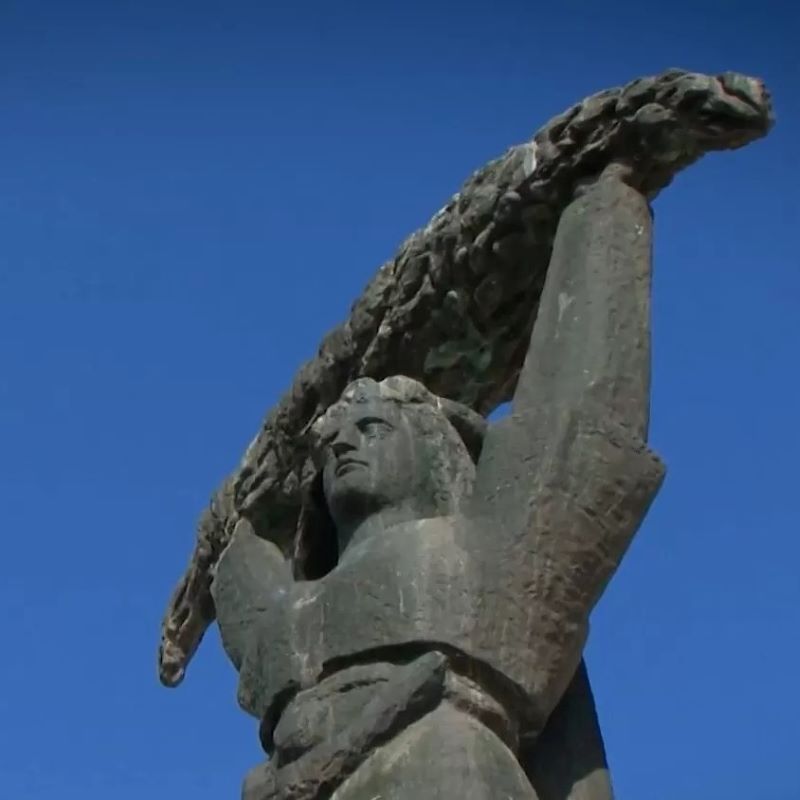
Kumanovo’s monumental landscape continues into the 20th century. The Memorial Ossuary, built in 1957, stands on a hill above the city and commemorates local fighters from the National Liberation War. Sources describe it as the work of architect Zordumis and sculptor Sreten Stojanović, with an obelisk and ossuaries holding the remains of those killed in the area. Its elevated position matters. From below, the monument gives the city a recognizable silhouette. From above, it gives visitors a wider look over Kumanovo and a clearer sense of how public memory was shaped in the Yugoslav period.
The Zebrnjak Monument adds another layer of memory just outside the city. This memorial stands on the battlefield of the 1912 Battle of Kumanovo near Mlado Nagoričane. It was built in 1937 to honor soldiers who died there and still marks one of the region’s defining battlefields. Together, the Memorial Ossuary and Zebrnjak show that Kumanovo carries its history in visible form. The city does not hide its difficult chapters. It places them on hills, in stone, and in the broader landscape around the urban center.
Food, Markets, and Everyday Kumanovo
Daily life gives Kumanovo another kind of appeal. The city stands within one of North Macedonia’s more mixed municipalities. The 2021 census records a diverse municipal population including Macedonians, Albanians, Serbs, Roma, and Turks. That variety shapes Kumanovo’s food, language, cafés, and rhythm of public life. It also explains why the city feels socially layered in a very natural way. Different traditions meet here through daily habit rather than display.
For visitors, the easiest way into that everyday world comes through food and the market atmosphere. Kumanovo is well known locally for sudzuk, grilled dishes, bakery food, and strong coffee. The city also keeps an active cultural calendar with events such as Jazz Festival Kumanovo and the Days of Comedy festival, though dates can shift from year to year. That mix of food, public gatherings, and local humor gives Kumanovo a warm social character. It is a city where the experience often improves once you sit down, slow down, and watch people move through the center.
Practical Planning Makes Kumanovo Easy to Combine with Other Stops
Kumanovo is easy to reach and easy to combine with other destinations. The city sits on Corridor X by road and rail, while Skopje International Airport lies about 20 kilometers to the south. The Northeast Region also connects through major roads toward Serbia and Bulgaria, which makes Kumanovo a strong first stop for overland travelers entering North Macedonia from the north. This access matters because it turns the city into a practical cultural base rather than a one-stop detour.
A half day in Kumanovo can cover the center and St. Nicholas Church. A full day can add Kokino and Staro Nagoričane. With two days, the plan opens further toward Proevce, where the regional bath uses thermomineral water, or toward Pelince and the wider northeast. Studies and tourism material place the water in the Proevce spa area at about 28 to 31 degrees Celsius, which makes it another gentle way to experience the region. In short, Kumanovo rewards both short and longer stays because the city itself and its surroundings support very different moods of travel.
Why Kumanovo Deserves a Longer Look
Kumanovo deserves more attention because it offers more than one kind of reward. It gives you a real city with a mixed cultural life, strong transport links, and an unforced local rhythm. It also gives you access to Kokino, one of North Macedonia’s signature archaeological sites, and to Staro Nagoričane, one of its finest medieval churches. Add the battle memory of Zebrnjak, the hilltop presence of the Memorial Ossuary, and the practical ease of reaching the city from Skopje or the airport, and the result is a destination with far more depth than its profile in guidebooks might suggest.
That is the real strength of Kumanovo, North Macedonia. It never relies on one single postcard image. Instead, it builds its appeal through layers. Ancient sky watching, medieval frescoes, Ottoman memory, modern history, and everyday city life all sit within reach of one another. For travelers who want a place that feels grounded, educational, and still full of local energy, Kumanovo offers exactly that kind of experience.
If you want to pair Kokino with a local food stop near Kumanovo, explore Kokino Megalithic Observatory & Kumanovo Flavors.
