
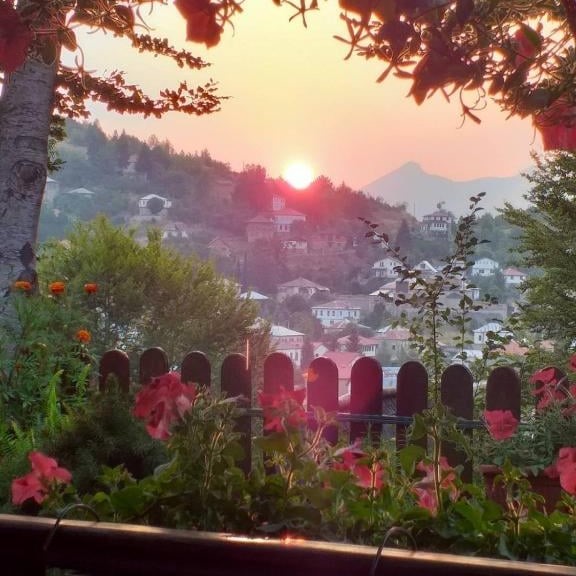
Discovering Lazaropole: A Macedonian Village of Artists and Stars
Tucked away high in the mountains of North Macedonia, the village of Lazaropole feels like a place removed from time. It sits quietly on a wide plateau, surrounded by the dense beech and oak forests of Bistra Mountain. At 1,350 meters above sea level, it stands as one of the highest and most isolated villages in the country. This isolation, however, is precisely what has preserved its unique character. The air here is fresh and cool, even in the summer, carrying the scent of wild herbs and damp earth. For travelers seeking an authentic experience away from busy cities, Lazaropole offers a rare glimpse into a world where tradition, nature, and art intertwine.
The story of Lazaropole begins centuries ago, rooted in a legend of survival. Local tradition tells of a man named Lazar, the sole survivor of a terrible attack on a nearby village. While his people hid in a cave called Kalina Dupka, they were discovered by their enemies, who lit a fire at the entrance and suffocated those inside. Lazar managed to escape through another opening in the cave, emerging into a field, or “pole” in the local language. There, he founded a new settlement, naming it Lazaropole, or “Lazar’s Field” . This story of resilience and new beginnings sets the tone for a village that has endured through the centuries, its spirit shaped by the rugged landscape that surrounds it.
The Artistic Soul and the Legacy of Dico Zograf
For much of its history, Lazaropole was not just a quiet farming community. It was a wellspring of creative talent. The village produced generations of skilled woodcarvers, builders, and painters who traveled across the Ottoman Empire to work, bringing their craftsmanship to grand projects far from their mountain home. This artistic heritage is the village’s lifeblood, and it is most powerfully on display in its spiritual heart: the Church of St. George.
Built in the mid-19th century and consecrated in 1841, this church is a treasure chest of religious art. Its interior features a magnificent iconostasis, a towering wooden screen covered in icons that separates the nave from the altar. The paintings are rich with crimson and royal blue, adorned with gold leaf, rising in tiers to a crucifix at the very top. This iconostasis holds a special place in Macedonian art history, as it contains the first known independent works by the legendary artist Dico Zograf.
Born in the nearby village of Tresonche in 1819, Dico Zograf became one of the most important painters of his time. The icons he created for the church in Lazaropole, signed “Dicho Perkoski,” marked the beginning of a prolific career that would see him decorate churches throughout the region. Walking into St. George’s, you are standing in the presence of a master’s genesis, surrounded by art that has inspired faith and admiration for nearly two centuries. Tragically, the church has also felt the sting of modern crime. In a devastating theft in April 2013, thieves ripped about two dozen icons from the iconostasis, including 23 priceless works attributed to Dico Zograf. The empty spaces remain as stark reminders of a loss felt deeply by the community, a wound in the village’s cultural soul. Despite this, the remaining icons and the intricate woodcarving retain their power, telling a story of devotion and beauty that the thieves could not take away.
Walking Through Stone and Forest
Exploring Lazaropole means engaging with its landscape and architecture on a personal level. The village itself is a museum of traditional building styles. You can wander through the old “maali,” or neighborhoods, following narrow lanes flanked by homes with their distinctive stone roofs. These heavy stone slabs, layered carefully over the wooden frames of the houses, are a signature of the Mijak architectural style, a testament to the building skills of the region’s inhabitants . As you walk, you might notice a small, wild rose growing in a rocky spot. This is the Lazaropole rose, a rare plant found nowhere else in the country, a small botanical treasure unique to this highland home .
Step outside the village, and the Bistra Mountain becomes your playground. The plateau and surrounding forests are crisscrossed with trails perfect for hiking, and the area has become a haven for mountain bikers who come to test their skills on the challenging single-tracks . The landscape is alive with the sounds of nature, and in the spring and summer, the meadows fill with color. For the truly adventurous, the cave Kalina Dupka, the very cave from the village’s founding legend, offers a chance for exploration, though it requires proper equipment and a local guide to navigate safely . These experiences connect you directly to the history and the wild beauty that defines life in Lazaropole.
Living Culture: Songs, Spirits, and Simple Pleasures
Lazaropole is not a place you simply see; it is a place you experience. The culture here is deeply rooted in traditions that have been passed down through generations. The village is particularly known for its distinctive polyphonic singing, a haunting and beautiful style of folk music known as the “Lazaropole song.” This vocal tradition, along with energetic folk dances like the famous and difficult Teškoto, forms the core of local celebrations . If you are lucky enough to visit during a quiet Orthodox feast day, you might hear these songs echoing through the village, connecting the present to its ancestors.
You can also participate in this living culture. Local women still practice the art of wool weaving, and you may find workshops where you can see them at work, creating textiles using methods that are centuries old. A visit to the Dico House, a gallery dedicated to the village’s most famous son, offers a deeper look into his life and the broader artistic movement he represented. To truly taste the local flavor, you must sample the plum rakija. This strong fruit brandy is a staple of Balkan hospitality, and in Lazaropole, it is often made from plums grown right on the mountain slopes. Sharing a glass with a local is a ritual of friendship, a simple pleasure that warms you from the inside out.
Planning Your Journey to the Highlands
Getting to Lazaropole is part of the adventure. The road to the village winds up the mountain in a series of narrow switchbacks, rewarding your patience with increasingly stunning views. Keep in mind that this is a remote area. Your mobile phone signal may be limited or nonexistent, allowing for a true digital detox. The village is very quiet outside of the main tourist season; the local café might only open its doors on weekends, so it is wise to plan accordingly. Always carry some cash with you, as you will need it to pay for a meal in a homestay or to purchase a handmade craft.
For such a small village, Lazaropole offers a comfortable base for exploration. Hotel Kalin sits right in the center of the village, providing cozy rooms, a restaurant serving international and local dishes, and a warm fire in the colder months. It is the perfect place to rest after a day of hiking or biking. When planning your itinerary, think of Lazaropole as the heart of a larger mountain experience. You can easily combine a visit here with a trip to the nearby and equally famous stone village of Galichnik, or head down into the stunning landscapes of Mavrovo National Park, with its lake and ski resort. Spending a night or two in Lazaropole allows you to fully absorb its peaceful rhythm.
As the sun sets over Lazaropole and the sky transforms into a velvet dome pricked with a million stars, you understand the village’s final, secret gift. With no light pollution to speak of, the night sky puts on a show of dazzling intensity. Standing in the cool mountain air, looking up at the Milky Way stretching from peak to peak, you feel a sense of connection to the cosmos that city dwellers rarely experience. This is the essence of Lazaropole. It is a place of deep history and profound quiet, of artistic triumph and cultural resilience. It is a village that asks you to slow down, to look closely, and to listen to the wind in the beech trees, to the echoes of old songs, and to the stories whispered by the stones. A visit here is not just a trip; it is a journey into the enduring spirit of the Macedonian highlands.

Tours that include this place
Mavrovo Villages Trail

From Ohrid to Bigorski chants, then Mavrovo meadows, Galichnik stone roofs, and Lazaropole pines. Picnic views and highland stories fill this 13h escape.
Thermal Peaks Villages

Begin with a Debar soak, climb Radika and Mavrovo to Galichnik and Lazaropole for rustic lunch, then finish among Ohrid’s sunset icons. Wellness, folklore, and panoramas in 14 uplifting hours.