
Metsovo: The Pindus Gem Where Stone, Cheese, and Art Meet
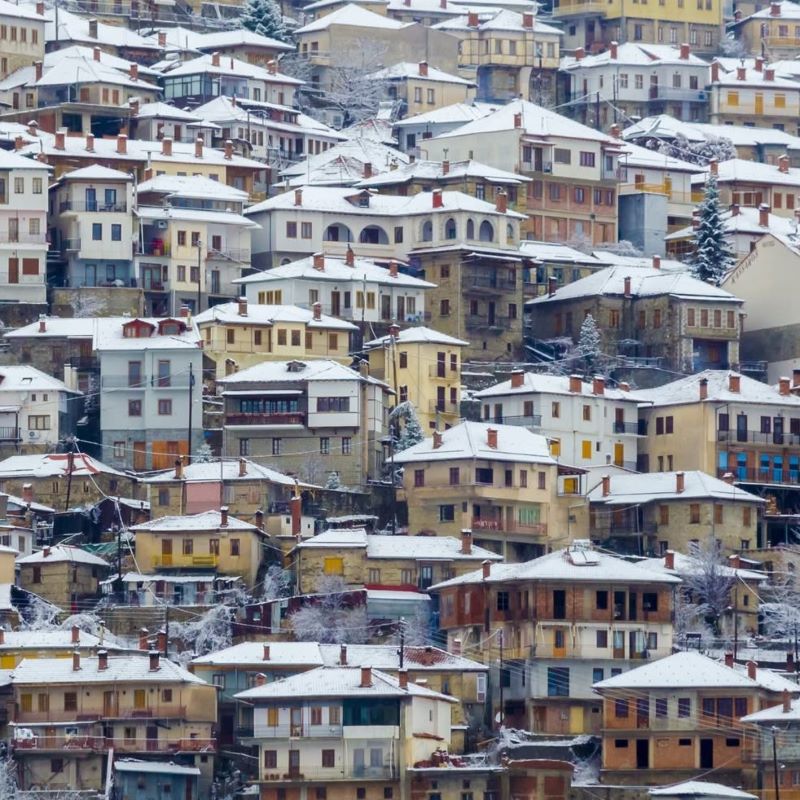
High in the Pindus Mountains of northern Greece, the town of Metsovo clings to a ridge at 1,160 meters above sea level. The air here carries the sharpness of altitude and the scent of fir and pine from the surrounding forests. Stone houses with slate roofs crowd the steep slopes, their upper stories seeming to lean toward one another across narrow lanes. This is the heart of the Vlach people in Greece, a community with its own language, its own traditions, and its own fierce pride. For centuries, Metsovo sat isolated in these mountains, connected to the outside world only by difficult passes that closed with the winter snows. That isolation preserved its character. Today, visitors come to taste its famous cheeses, to explore its galleries and churches, and to walk paths that shepherds and merchants have used for a thousand years.
The story of Metsovo weaves together geography, culture, and the generosity of wealthy benefactors. The Vlach people who settled here, traditionally shepherds practicing transhumance, gradually built a prosperous community. By the 18th century, Metsovo had become a significant trading hub. Its merchants traveled across the Ottoman Empire and into Europe, returning with wealth and ideas. They built grand stone manor houses, endowed churches and schools, and established a tradition of philanthropy that continues to shape the town today. The names of these benefactors, families like Averoff, Tositsa, and Stournara, appear everywhere, on gallery walls and hospital wings and scholarship endowments.
The Stone Architecture of a Mountain Town
Walking through Metsovo means walking through a living museum of traditional Epirus architecture. The houses, built entirely from local stone, feature thick walls designed to hold winter warmth and summer cool. Slate roofs, heavy and dark, cap these structures with the same material that underlies the entire mountain. The upper stories often project slightly over the lower ones, supported by wooden brackets carved with geometric patterns. These projections create covered walkways below, protecting pedestrians from rain and snow. The windows, small on the lower levels for security and warmth, grow larger on the upper floors where they capture light and views across the valleys.
The Tositsa Mansion, now the Folklore Museum, offers the best introduction to this architectural tradition. Built in the 18th century by a wealthy merchant family, the mansion preserves the original layout and furnishings. You enter through a heavy wooden door into a cobbled courtyard. Inside, rooms open off each other, their ceilings painted with floral designs and their walls lined with built-in cupboards and shelves. The reception rooms, where the family entertained guests and conducted business, feature fireplaces large enough to roast a whole lamb. The private quarters upstairs offer views over the town and the mountains beyond. Walking through these rooms, you understand how these merchant families lived, combining traditional mountain ways with the sophistication of their European travels.
The Averoff Gallery and Greek Art
Metsovo’s greatest cultural treasure sits in a building that looks like a traditional mansion but houses a world-class art collection. The Averoff Gallery, donated by the benefactor Evangelos Averoff, contains works by the most important Greek artists of the 19th and 20th centuries. The collection reads like a who’s who of modern Greek art. You find paintings by Theodoros Vryzakis, the first painter of modern Greece, with his scenes from the War of Independence. Gyzis and Iakovidis, masters of the Munich School, offer genre scenes and portraits that capture 19th-century Greek life. Parthenis introduces the modernist currents of the early 20th century, with his simplified forms and bright colors.
The gallery occupies a purpose-built structure designed to harmonize with Metsovo’s traditional architecture while providing modern museum conditions. Natural light floods the upper galleries through skylights, illuminating the paintings as you might see them in a private home. The collection includes sculpture as well, with works by Chalepas and others who shaped Greek sculptural tradition. Visiting the Averoff Gallery after exploring the mountain landscape of Metsovo creates a powerful contrast and connection. These artists drew inspiration from landscapes like this one, and seeing their work here, in the town that their patron called home, deepens your appreciation for both the art and the place.
Metsovone and the Cheeses of the Pindus
No visit to Metsovo would be complete without tasting its most famous product. Metsovone cheese has earned Protected Designation of Origin status from the European Union, meaning that only cheese made here, according to traditional methods, can bear the name. This semi-hard cheese, smoked and aged, resembles Italian provolone in texture and flavor. Shepherds developed the technique centuries ago, using the abundant milk from their flocks of sheep and cows. They smoke the cheese lightly over beech and pine fires, giving it a subtle, distinctive flavor that pairs perfectly with the local wines.
You can taste Metsovone throughout the town, served as a table cheese, melted over dishes, or grilled on skewers as a street food. The cheese appears also in local pasta dishes, especially with hilopites, the small square egg pasta that Epirus cooks have made for generations. The classic preparation involves boiling the pasta until tender, then tossing it with butter and generous shavings of Metsovone. The heat of the pasta softens the cheese slightly, creating a creamy coating on each square. This simple dish, served in every taverna, captures the essence of Metsovo cooking, rich ingredients prepared with restraint and respect for tradition.
Beyond Metsovone, the town produces other cheeses worth seeking out. Metsovela, a harder cheese aged longer, offers a sharper flavor suitable for grating. Fresh myzithra, a soft whey cheese similar to ricotta, appears in pies and desserts. The local yogurt, thick and tangy from sheep’s milk, accompanies honey and nuts for a breakfast that fuels mountain walks. Cheese shops throughout the town offer samples, allowing you to taste before you buy.
Wine in the Mountains
Growing grapes at 1,200 meters presents serious challenges. The cold winters, late springs, and early autumns leave a narrow window for ripening. Yet the Averoff family, determined to establish wine production in their ancestral home, persisted. In the 1960s, Evangelos Averoff planted vineyards on carefully selected slopes around Metsovo, choosing grape varieties suited to high altitudes. The result, Katogi Averoff winery, produces some of Greece’s most distinctive mountain wines.
The winery combines modern techniques with traditional approaches. The vineyards, planted at elevations between 850 and 1,200 meters, benefit from the intense sunlight and cool nights that characterize mountain climates. These conditions allow grapes to ripen slowly, developing complex flavors while retaining natural acidity. The winery produces reds from Cabernet Sauvignon, Merlot, and the local Xinomavro variety, along with whites from Chardonnay and Traminer. The wines show elegance and structure, with a mineral quality that reflects the limestone soils of the Pindus.
Visitors can tour the winery, walking through the barrel room where wines age in French oak, then tasting the results in a modern tasting room with views across the vineyards. The experience deepens your understanding of how this mountain environment shapes everything it touches, from cheese to wine to the character of the people who live here.
The Bear Festival and Living Traditions
Each August, Metsovo celebrates its connection to the natural world with an unusual festival. The Bear Festival, or Festival of the Bear, honors the brown bears that still roam the forests of the Pindus. These bears, part of the last significant population in Greece, once faced serious threats from hunting and habitat loss. Today, protected areas and conservation efforts have helped their numbers recover. The festival, organized by local environmental groups and supported by the town, raises awareness about bear conservation while celebrating the cultural traditions that grew up around these animals.
The festival features music, dancing, and educational programs. Traditional Epirus clarinet music fills the streets, its haunting melodies echoing off the stone walls. Local dancers in traditional costume perform the slow, dignified dances of the mountains. Children participate in bear-themed activities and learn about the animals that share their forests. The festival reminds visitors that Metsovo exists within a living ecosystem, one where bears, wolves, and wild boar still move through the forests that surround the town.
Throughout the year, other traditions continue. The Aromanian dialect, related to Romanian and descended from the Latin spoken by Roman soldiers and settlers, still echoes in the streets. Older residents use it among themselves, and younger people learn it in cultural associations. The women’s cooperative, founded to preserve traditional crafts, produces hand-woven textiles using patterns passed down through generations. You can visit their workshop, watch them at their looms, and purchase woolen mantles, bags, and blankets that carry the colors and designs of the Pindus.
Exploring the Forests and Villages
The landscape around Metsovo invites exploration. Donkey tracks, worn into the mountainsides by centuries of use, lead from the edge of town into the surrounding forests. These paths, now maintained for hikers, offer access to a world of pine and beech woods, clear streams, and mountain meadows. The Valia Kalda valley, part of the Vikos-Aoos National Park, lies within easy reach, offering some of the most spectacular scenery in Greece. Here, dense forest gives way to alpine pastures, and the views stretch across ridges and peaks that change color with the passing light.
A day loop from Metsovo can take you to other destinations worth your time. The lake city of Kastoria, with its Byzantine churches and fur trade heritage, lies about two hours away through mountain scenery. The Vikos Gorge, one of the deepest canyons in the world, offers hiking and views that reward the journey. Closer to Metsovo, the villages of the Zagori region present their own stone architecture and traditional character, each with its own history and charm.
Practical Metsovo
Getting to Metsovo has become easier since the completion of the Egnatia Odos highway, which follows the ancient Roman road across northern Greece. Exit 30 brings you onto the road that climbs to the town. In winter, the highway remains open, but the final approach requires caution. Snow falls heavily here, and chains may prove necessary. The town itself, with its steep streets and stone surfaces, can become slippery, so sturdy boots with good traction serve visitors well.
Accommodation options range from traditional guesthouses to modern hotels. Many of the stone mansions have been converted to lodging, offering rooms with exposed stone walls, wooden ceilings, and fireplaces. Breakfast in these guesthouses typically includes local cheeses, fresh bread, honey from mountain hives, and yogurt that sets the standard for the day. Restaurants serve hearty mountain cooking, with lamb cooked in parchment, wild greens gathered from the hillsides, and pies filled with cheese and herbs.
Summer brings cool temperatures and bright sunshine, perfect for walking and exploring. Autumn paints the forests in gold and red, and the clear air offers distant views. Winter transforms Metsovo into a snow-covered scene from a Christmas card, with the added attraction of skiing at the nearby Anilio resort. Spring brings wildflowers and the return of shepherds moving their flocks to high pastures. Each season offers its own reasons to visit, its own version of the Metsovo experience.
As you leave Metsovo, descending through the switchbacks toward the plain, you carry with you the taste of smoked cheese, the memory of mountain light on stone walls, and the echo of clarinet music drifting through the evening air. This town, perched on its Pindus ridge, offers something increasingly rare, an authentic encounter with a place that has maintained its character through centuries of change. The Vlach merchants who built those stone mansions would recognize Metsovo today, and they would welcome you to share it.

Tours that include this place
Metsovo Kastoria Circuit

Savor Greek highlands: Florina café pause, Metsovo’s smoked cheese and wines, then lakeside Kastoria with Byzantine chapels and mansions. A gourmet, panoramic 10-hour mountain circuit.
Saranda Riviera Escape

Three-day escape via Florina, Ioannina and Parga to Sarandë. Sunset bays, UNESCO Butrint, Blue Eye spring, Ksamil beaches, and alpine Metsovo—coast, culture, and peaks.
Saranda Meteora Odyssey

Road-trip via Florina, Metsovo, Ioannina and Parga to Sarandë. See Butrint, Blue Eye, Ksamil, then marvel beneath Meteora’s cliff monasteries. A curated 3-day odyssey.