
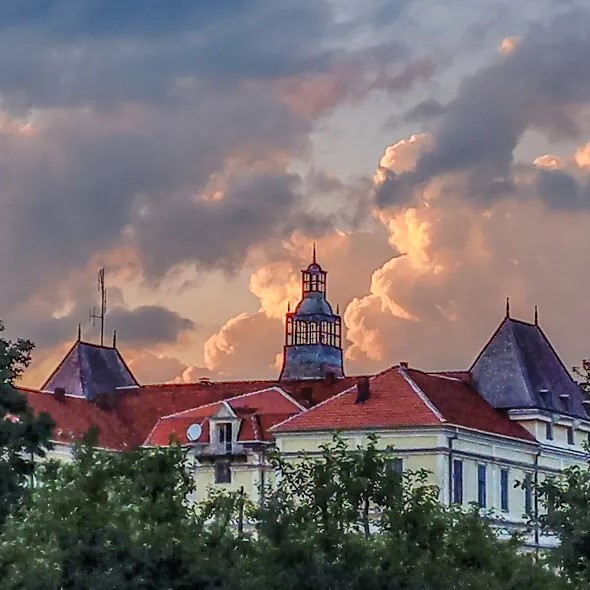
Resen, North Macedonia: The Prespa Town of Apples, Palaces, and Quiet Mountain Views
Resen, North Macedonia feels different from the better-known towns around it. Ohrid draws visitors with lakefront drama and old churches. Bitola draws them with urban elegance and café life. Resen moves at a gentler pace. It sits in the Prespa basin as the region’s main town, close to Lake Prespa and framed by mountains, orchards, and village roads that pull you deeper into the landscape. That setting gives Resen its appeal from the start. You arrive for a short stop, then realize the town can anchor a much richer day built around architecture, food, local history, and the wider Prespa valley.
Where Resen Sits and Why the Setting Matters
Geography explains Resen better than any slogan can. The town stands in the southwestern part of North Macedonia in the Prespa area, between the mountain systems of Baba and Galichica, with Bigla also shaping the wider basin. Resen itself rises to roughly 880 to 885 meters above sea level, while Great Prespa Lake lies a little lower in the valley. That altitude gives the area a fresh feel, even in summer, and it helps explain why agriculture thrives here. The landscape shifts quickly from town streets to orchards, then to open lake views and higher slopes. For travelers, that means Resen works well as a transition point between town exploration and nature-based excursions.
The Prespa setting also gives Resen a strong regional role. The town serves as the administrative and economic center of the Prespa area, and that position still shapes local life today. Roads connect it with Ohrid, Bitola, the lake villages, and border approaches toward Albania and Greece. Resen itself stays compact enough for easy walking, yet the places that make the wider region memorable sit just beyond the center. That is why the town works so well for travelers. You can stroll through its core in a relaxed way, then head outward toward villages, churches, lakeshore viewpoints, or mountain trails without spending the whole day in transit.
A Town with Ottoman Roots and a Strong Modern Identity
Resen’s story stretches back to Roman times, when the Via Egnatia route passed through the broader area. Over the centuries, the Prespa region moved through Byzantine, medieval, and Ottoman control, and each era added something to the cultural landscape around the town. Yet the Resen that visitors see today took shape especially during the late Ottoman period and the years around the turn of the 20th century. That was the era when the town grew in importance, developed its urban profile, and produced one of its best-known historical figures, Ahmed Niyazi Bey, a leading figure in the Young Turk Revolution.
This history matters because Resen does not rely on one single monument or one preserved old quarter. Instead, the town tells its story through a blend of regional role, Ottoman-era legacy, and early modern ambition. You feel that in the town plan, in the calm central streets, and above all in the presence of the Saraj. Resen gives the impression of a place that once dreamed on a larger scale, and that ambition still shapes how visitors read the town today. It feels provincial in size, yet unusually cultured in character.
The Saraj Gives Resen Its Signature Landmark
Any serious visit to Resen begins with the Saraj. This French-style neoclassical palace stands as the town’s defining monument and one of the more unusual buildings in North Macedonia. Sources agree that Ahmed Niyazi Bey built it in the early 20th century, inspired by European models and by a desire to bring a more cosmopolitan architectural language into Resen. Local tourism writing even frames it as part of his dream to turn Resen into a kind of little Paris. Whether you read it as personal vision, political statement, or architectural curiosity, the result still stands out.
The Saraj matters for more than its facade. Today it houses cultural functions that keep the building alive in the town’s daily life. Sources point to the Dragi Tozija House of Culture, the Resen Ceramic Colony, gallery space, and a library inside the complex. That continued public use gives the site real value. Visitors do not just circle a relic from the past. They step into a building that still shapes Resen’s cultural identity. The palace therefore works on two levels at once. It offers visual drama and historical depth, while also serving as a living cultural center for the present-day town.
The grounds add to the experience because the Saraj sits comfortably within the slower rhythm of Resen. You can arrive without rushing, walk the exterior, look closely at the proportions and decorative details, then give the building time to reveal itself. In a larger city, a palace like this might compete with ten other headline sights. In Resen, it holds the center of attention, which allows visitors to appreciate it more fully. That slower encounter suits the town very well. Resen rewards patience far more than speed.
Resen Opens the Door to Panoramas and Hilltop Sacred Sites
Resen also works well for travelers who like viewpoints and short drives into the surrounding landscape. The town itself sits on relatively level ground, yet the Prespa basin rises around it, and those slopes quickly open long views across orchards, villages, and lake country. This is one reason the area feels larger than it looks on a map. The town center gives you orientation, but the nearby heights give you perspective. A late afternoon drive or walk outside town often delivers the sense of space that defines Prespa as a whole.
If you want a sacred site with a strong setting, the church of Sts. Peter and Paul above Ljubojno makes a rewarding nearby stop from Resen. A regional study prepared for the Pelagonia planning region describes the church complex on a wooded plateau above the village, reached in about thirty minutes on a forest track, with the present church completed in 1923. This kind of outing helps explain why Resen works as a base rather than only a town stop. Its strongest experiences often come from pairing the center with the villages and slopes around it. You begin in town, then move outward into the wider Prespa story.
Apples Shape the Economy, the Landscape, and the Taste of the Region
Resen’s identity rests as much on orchards as on architecture. Multiple regional sources describe apple growing as the main agricultural activity in the Prespa area, and they note that Prespa apples are a recognized brand across the Balkans. That is easy to believe once you see the landscape. Orchards take up a huge share of the surrounding land, and they shape the visual character of the valley as clearly as the mountains do. In autumn especially, the apple story moves from background fact to lived reality. Harvest activity, local products, and roadside sales all make the agricultural base of the region impossible to miss.
This agricultural identity also gives visitors a direct sensory way into the region. Around Resen and Prespa, farm visits and orchard-based experiences now form part of the local tourism offer. Sources on local agritourism point to apple and cherry orchards, tasting experiences, and farm shops selling products tied to the valley. That gives Resen a grounded kind of tourism appeal. Instead of relying only on monuments, the town and its surroundings invite people to taste the place itself. Local apple juice, preserves, and seasonal fruit do more than fill a table. They explain why this valley matters economically and culturally.
Culture in Resen Grows from Heritage and Everyday Life
Resen also has a cultural life that exceeds what its size might suggest. The Ceramic Colony connected with the Saraj gives the town an international artistic link, while the House of Culture continues to host local events and public activity. This matters because Resen could easily have become a town known only for passing through on the way to Lake Prespa. Instead, it keeps a distinct identity of its own. Art, local heritage, and agriculture all meet here, and that combination gives the town unusual balance.
The population mix adds another layer. Census data for the town records a Macedonian majority together with Turkish and Albanian communities, while the wider municipality also includes smaller Roma and Vlach populations. That diversity belongs to the long history of the wider Prespa region and helps shape the town’s language, food, family memory, and local customs. Visitors may first notice the architecture and landscape, yet the deeper character of Resen comes from this human mix and from the calm way different strands of local identity share the same space.
How to Plan Your Time in Resen
Resen works well in more than one format. If you only have half a day, focus on the Saraj, a slow walk through the center, and a drive toward Lake Prespa for a broader sense of the valley. If you have a full day, the options open up. You can pair the town with lakeshore villages, a hilltop church, or a boat outing toward Golem Grad. Galicica National Park describes Golem Grad as the largest island in North Macedonia, rich in flora, fauna, and cultural remains, which makes it one of the region’s more distinctive excursions. Resen therefore succeeds both as a short stop and as a launching point.
Access is straightforward. Resen lies about 35 kilometers from Ohrid and just over 30 kilometers from Bitola, and the center remains easy to explore on foot. Bus links connect the town with nearby cities, yet the wider Prespa region spreads out enough that a car gives far more freedom once you want lakeshore roads, village churches, and orchard stops in the same day. That practical point matters. Resen rewards flexible travel because its best moments often sit between the obvious stops.
Why Resen Leaves a Deeper Impression Than You Expect
Resen stays with visitors because it balances several kinds of value without forcing any of them. It offers a rare palace, a strong agricultural identity, a mountain-framed basin, and easy access to one of North Macedonia’s richest lake regions. It also offers something less tangible but just as important. It gives people room to slow down and read the landscape properly. In Resen, the story comes through in layers. First the Saraj catches your eye. Then the orchards explain the economy. Then the road out of town reveals the wider Prespa world of villages, water, churches, and long views.
That is why Resen deserves more than a quick stop on a transfer day. It can absolutely work as a half-day detour, but it gives more when you let the town connect you to the whole valley. Resen, North Macedonia offers culture without noise, scenery without pressure, and regional character in a form that feels honest and easy to understand. For travelers who want substance as well as beauty, that combination is hard to forget.

Tours that include this place
Prespa Ohrid Panorama

Scenic 12-hour corridor: Bitola monuments, Heraclea mosaics, Rotino, Molika, Malovište, Prespa pelicans, Galichica ridge, St. Naum springs, Bay of Bones, Ohrid sunset. Archaeology, wildlife, water.
Ohrid Struga Gems

From Pelister pines to UNESCO Ohrid: stroll medieval lanes, boat to St. Naum springs, sip by Struga’s Drim, and hike to Radožda’s cliff church. A relaxed 10-hour lakeside circuit from Bitola.
Ohrid Bitola Legacy

Compare UNESCO Ohrid’s churches and fortresses with Bitola’s mosques, bazaar, and Heraclea mosaics. Two cities, one 11h story of trade, faith, and empire.