
Snake Island in Lake Prespa: History, Wildlife, Access, and What to Expect
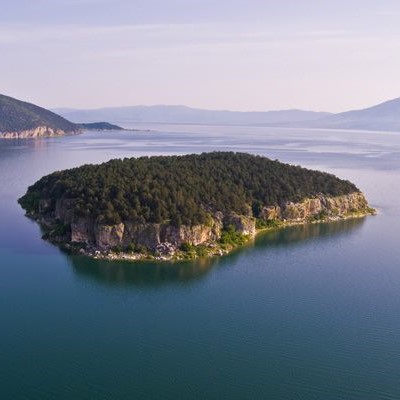
Golem Grad feels remote in a way that very few places in North Macedonia still do. The island sits in Lake Prespa near the borders with Albania and Greece, and the approach already sets the tone. You cross open water, leave the mainland behind, and arrive at a place shaped by cliffs, reptiles, old churches, juniper woods, and archaeological remains. Galicica National Park describes it as the country’s largest island and places it inside one of the park’s strict protection zones, which explains why the island still feels wild and carefully guarded at the same time.
Why Golem Grad feels unlike any other place in Prespa
A first look at Golem Grad explains part of its appeal, but the deeper value comes from how much the island holds in such a small space. Galicica National Park says the island is about 750 meters long and 450 meters wide, with its highest point rising 50 meters above the lake. Those numbers matter because they show how compact the island really is. You can walk across it in a short time, yet the place carries enough nature and history to fill a full half day with real interest.
The park also highlights two distinct plant communities on the island, one centered on wild juniper and another on wild almond and European nettle tree. That mix gives Golem Grad a southern, almost Mediterranean feel that stands out in the Prespa basin. When you walk there, the island does not feel like a simple rock in the lake. It feels like a self-contained world with its own climate, vegetation, and rhythm. That is one of the reasons the island stays in people’s memory long after the boat ride back.
A small island with a very long human story
Golem Grad may look wild today, yet archaeology shows that people used and settled the island for a very long time. A recent overview of Prespa archaeology describes the island as a karstic and tectonic islet with an unusually long period of use. It notes Neolithic tools that point to early fishing activity, then an organized settlement that developed after the fourth century BC, including a defensive wall on the southern side. Another archaeology summary describes house foundations from the second century BC to the fourth century AD and a fourth-century cistern scattered across the island.
That long continuity gives the island its name extra weight. Golem Grad means “Big Town,” and the name makes sense once you understand that this tiny island once carried a serious human presence. It was never large in size, but it held settlement, storage, worship, and defense in a concentrated form. That is why a visit here feels different from a standard nature stop. The island lets you read centuries of survival in a very small landscape.
Why people call it Snake Island
Golem Grad’s better known nickname comes from its reptiles. The Macedonian Ecological Society describes the island as ecologically and culturally significant and explains that its long fame as “Snake Island” grew from the historically large population of dice snakes. The same source says the island also supports the horned viper, though in smaller numbers, and recent monitoring found that the dice snake population had fallen sharply from earlier estimates while the horned viper population remained stable.
Galicica National Park adds more detail to that picture. Its island page says the dice snake and common wall lizard on Golem Grad grow larger than inland populations, while the nose-horned vipers there are dwarfed. That kind of adaptation shows how unusual the island’s ecology really is. This is not just a place where snakes happen to live. It is an island where isolation shaped animal life in visible ways. For visitors, that gives the walk an extra sense of attention. You keep looking at the ground, the rocks, and the low vegetation because the wildlife is part of the island’s identity, not a side note.
Birdlife adds another layer to the island
Snakes may shape the nickname, but birds shape the skyline. Galicica National Park lists the great cormorant and the Dalmatian pelican among the island’s notable fauna. The Prespa Ohrid Nature Trust goes even further and describes Golem Grad as home to the largest nesting colony of great cormorants in the country, with long-term monitoring focused on how those nests affect the old Grecian juniper woods. That tension between rich birdlife and fragile vegetation is one of the island’s defining conservation stories.
This matters for travelers because the island works just as well for birdwatchers as it does for people drawn by archaeology or reptiles. You can stand at the shore or on a higher point and understand that Golem Grad is part of a much larger Prespa ecosystem. The island’s wildlife does not stop at the shoreline. It connects to the open lake, the nearby wetlands, and the wider transboundary landscape that makes Prespa so important in the Balkans.
The churches and ruins give Golem Grad its soul
Nature draws people in, yet the old sacred sites give Golem Grad much of its emotional weight. Galicica National Park says the island holds several cultural and historical monuments within a very small area, including the preserved Church of St. Peter, the medieval Church of St. Dimitrija, and an Early Christian basilica where archaeologists found remains of a floor mosaic. That cluster alone turns the island into one of the more unusual cultural landscapes in North Macedonia.
Other cultural sources help fill out that picture. Meet Prespa describes the whole island as an archaeological site with remains from Roman times and later periods, while Religiana notes that the Church of St. Peter dates to around 1360 and remains the island’s best-preserved church. Together, those sources show that Golem Grad is not one isolated chapel in a wild setting. It is the remnant of a wider sacred and settled world that once used the island much more intensively than today.
That is also why the walk across the island feels so layered. One moment you focus on the lake, the reptiles, and the juniper. A few minutes later you stand by masonry, church walls, or traces of older habitation and the mood changes completely. The island keeps shifting between wilderness and memory. That movement gives the visit its real depth.
What the visit feels like on the ground
The experience starts with the boat. Current tours commonly depart from Konjsko, and some operators also run routes from Stenje, which reflects the island’s position off the Prespa shore. From there, the crossing itself becomes part of the trip. You watch the island rise slowly, the cliffs sharpen, and the tree cover thicken before you step ashore. Several current tour listings market the crossing as a guided or arranged outing rather than a casual drop-in stop, which fits the island’s protected status.
Once you land, the pace changes. The management plan for Galicica National Park says the whole territory of Golem Grad lies inside the park’s strict protection zone, and it adds that visits there are allowed only under strictly regulated conditions, including walking on the island trail. That tells you what kind of place this is. Golem Grad welcomes visitors, but it asks for discipline in return. You do not come here for beach-club energy or loose exploration. You come for a guided, attentive encounter with a protected landscape.
That approach improves the visit. Staying on the trail helps you notice more. The eye moves from reptile habitat to old stonework, then to birdlife, then back to the lake. A small island can feel much larger when every part carries a different story. Golem Grad does that very well.
Practical planning matters here more than at easier lake stops
Advance planning matters because Golem Grad sits inside a stricter protection regime than the average lakeside stop. Galicica National Park’s ticket pages currently list a “Visiting Golem Grad” fee of 300 denars, and the management plan confirms that visits happen under regulated conditions inside the strict protection zone. In practice, that makes early coordination important, especially if you want a boat, a guide, or a specific departure point on the Prespa shore.
The practical side of the trip also starts before the boat leaves. Wear solid walking shoes, bring water, carry sun protection, and keep space between yourself and wildlife. The island’s reptile fame is real, and the ecological value is real too. A careful visitor gets a richer experience and helps protect the site at the same time. That balance matters more here than in almost any other easy half-day excursion in the country.
I could confirm the park entry ticket and the regulated access model, but I could not confirm a fixed public ferry timetable from an official source. The clearest current pattern comes from arranged boat trips and guided visits from the Prespa shore.
How to fit Golem Grad into a wider Prespa day
Golem Grad works best as part of a broader Prespa loop rather than a stand-alone transfer. The island visit already gives you wildlife, archaeology, sacred heritage, and open water views. After that, the rest of the day can stay simple. Continue along the Prespa shore, stop in the nearby villages, or connect the outing with the high views from Galicica, whose park routes and viewpoints open broad panoramas over both Prespa and Ohrid. That pairing works especially well because Golem Grad gives you close detail, while the mountain gives you scale.
This is where Golem Grad really succeeds as a travel experience. It adds something that other lake stops rarely deliver. On the mainland, Prespa already feels quiet and spacious. On the island, that quiet becomes sharper. The water creates distance, the ruins add age, and the protected habitat gives the whole place a sense of fragility. By the time you return to shore, Lake Prespa no longer feels like empty blue space on a map. It feels storied, inhabited, and alive.
Why Golem Grad stays with you
Golem Grad stays in memory because it offers more than one reason to care. It is visually striking, yet the deeper effect comes from the way nature and history sit together on the island. You step into a protected zone of juniper, birds, reptiles, and steep stone, and at the same time you move through churches, mosaics, settlement traces, and a very long human story. Few places in North Macedonia hold that mix so tightly.
For travelers who want something beyond the standard lake viewpoint, Golem Grad gives exactly that. It asks a bit more planning and a bit more care, but it returns a richer experience. You leave with the feeling that you visited a place that still keeps part of itself hidden. That is a rare quality in modern travel, and it is the real reason Snake Island matters.

Tours that include this place
Snake Island Konjsko

Seasonal adventure: boat Prespa to wild Golem Grad (Snake Island), village Konjsko lamb lunch, then Galichica ridge and Bitola monuments. Wildlife, flavors, and views in a rare nine-hour experience.
Snake Island Lakes
Boat Prespa to wildlife-rich Golem Grad, lunch in Konjsko, crest Galichica for twin-lake views, then explore UNESCO Ohrid. A vivid 13h mix of nature, panoramas, and heritage.
Snake Island Feast

Hike Galichica ridges, boat to wildlife-rich Golem Grad, feast in Konjsko, visit St. Naum and Bay of Bones, then sunset in Ohrid. Seasonal 12h mountain-lake adventure.
Konjsko Village Lunch

Feast on bell-baked lamb and village wine in Konjsko, cruise Prespa to ruins and wildlife on Golem Grad, then tour Bitola’s monuments. Rustic flavors, island nature, heritage—13 hours.