
Vevčani Village & Springs: History, Carnival, Top Sights, and Day Trip Guide
Why Vevčani leaves a strong impression
Vevčani feels different from the first few minutes. You arrive in a mountain village, yet water seems to lead the whole experience. It runs through the place, shapes the sound of the streets, and gives the village a calm, fresh energy. At the same time, Vevčani carries a bold personality. It is known for humor, pride, satire, and a local spirit that has stayed sharp for decades. That mix of beauty and attitude gives the village its appeal.
For travelers around Ohrid and Struga, Vevčani works both as an easy half day stop and as a place worth slowing down for. You can walk the spring area, explore the village lanes, step into its church heritage, and sit down for a relaxed meal with running water close by. The village also has a deeper story. Under the postcard calm, Vevčani holds onto a long memory of local independence and public humor, and that story still shapes how visitors experience it today.
Where Vevčani sits and why the water matters
Vevčani lies in the foothills of Jablanica, near Struga, with village elevations described in official tourism material as ranging from 830 to 960 meters. The springs themselves sit around 900 meters above sea level. That higher position gives the village cooler air and a stronger mountain feel than the lakefront towns below. North Macedonia Timeless places Vevčani about 14 kilometers from Struga, while current travel listings put the road trip from Ohrid at roughly 25 kilometers and about 24 minutes by car.
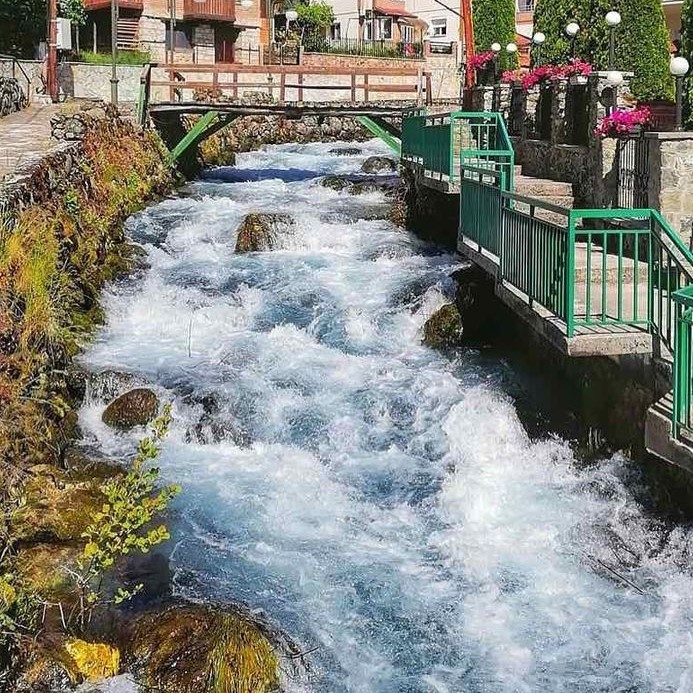
The springs are the heart of the place. Vevčani Info describes them as a protected natural monument, first declared in 1997 and redesignated in 2012, with a total protected area of 1,370 hectares. The spring system consists of seven smaller springs that merge into the Vevčani River. The same source gives an average water flow of about 1,500 liters per second and notes that the volume rises further in spring and early summer. That steady rush of clean mountain water explains why the site feels lively in every season.
A village with a strong independent streak
Vevčani’s identity comes from more than landscape. The village is also tied to one of the better-known acts of local resistance in modern North Macedonian memory. Vevčani Info recounts the 1987 conflict over attempts to redirect spring water away from the village. Residents resisted, clashes followed, and the event entered local history as the “Vevcani case.” The same source says that after those events came a symbolic self-proclamation of the Republic of Vevčani, along with its own passports and “ličnici” money as a tourist attraction.
Secondary sources place the republic story in 1991, shortly after Macedonia’s independence, and describe it as a self-styled or symbolic republic rather than a recognized state. That detail matters because it explains the playful tone visitors still find in the village today. The republic idea was never just a gimmick. It grew out of a real defense of local water and local choice. That is why Vevčani’s humor feels grounded. Even its souvenirs come with a memory behind them.
The carnival that keeps satire alive
If one event captures the soul of Vevčani, it is the carnival. Vevčani Info states that the celebration takes place each year on 13 and 14 January, following the old calendar tradition. The same source describes it as archaic, traditional, mystical, and full of unique masks. European Heritage Days also describes the carnival as a mix of pagan beliefs, Orthodox New Year timing, and modern public expression, while emphasizing its reputation as one of the Balkans’ famous village festivals.
What makes the carnival memorable is its tone. This is not a neat costume parade built around polished showpieces. It is sharper, louder, and more local than that. Vevčani Info explains that masked participants move through the village like street theatre and that the costumes often reflect public life from the previous year. European Heritage Days adds that humor and sarcasm sit at the center of the event. In simple terms, Vevčani uses masks to laugh at power, poke fun at current events, and turn winter into a stage.
What to see first at the springs
The spring zone gives you the easiest and strongest introduction to Vevčani. From the village center, the route is short. Vevčani Info says the road is fully asphalted for 550 meters and that you can reach the springs on foot in about seven minutes. Once there, the area opens into bridges, paths, flowing water, small chapels, picnic corners, and views into the cave opening where the main source emerges. In the evening, the springs stay lit, including underwater lighting, which changes the whole mood of the site.
This part of Vevčani works well because it gives you movement at a gentle pace. You can stop often, listen, cross a bridge, step closer to the water, and then sit for a while. Official tourism text for Vevčani repeatedly highlights the arranged paths and bridges around the springs, and traveler reviews echo that impression. In colder months, the constant water and lower temperatures make sturdy shoes a smart idea. The route stays short and easy, though the surface deserves a little attention in winter.
The church, stone craft, and village texture
After the springs, the next layer of Vevčani reveals itself in the built landscape. North Macedonia Timeless highlights St. Nicholas Church as a key landmark near the spring area, and separate church references identify it as one of the village’s major cultural sites. St. Nicholas Center states that the church was built between 1834 and 1864. It also attributes the iconography to Dičo Zograf, while the Dicho Zograf site notes that he worked on the icon screen for St. Nicholas in Vevčani in 1867 and that his son Avram completed the commission in 1879.
That church matters because it gives Vevčani more than scenic value. It anchors the village in the visual language of nineteenth-century Macedonian church art. Around it, the wider village texture adds another layer. A Green Destinations profile on Vevčani points to a long local tradition of building skills, stone carving, and facades. That helps explain why the village streets feel crafted rather than accidental. Even a simple walk through Vevčani gives you stone yards, old walls, carved details, and a sense that local skill shaped everyday space here for generations.
Food, local rhythm, and village culture
Vevčani also rewards slow travel. You do not need a packed checklist here. The village works best when you leave room for a meal, a drink, and a little conversation. Official tourism material points to hospitality as an important branch of village life, and local food coverage places restaurants right by the springs. That setting alone makes lunch feel like part of the visit rather than a break from it.
The cultural side of the village extends beyond the carnival. Vevčani Info lists an international art colony among its recurring cultural events, and related local coverage describes artists gathering here to draw inspiration from the village. That matters because it shows Vevčani as more than a one-day scenic stop. It is also a place where people keep producing culture, whether through masks, satire, painting, music, or the strong local voice you hear in daily life.
How to pair Vevčani with nearby stops
Vevčani fits very well into a wider Struga and Ohrid day route. Macedonia Tourism’s Struga page suggests pairing the area with Radožda’s cave church, which sits west of Struga and adds a very different mood to the day with rock, frescoes, and lake views. Struga itself gives you the Black Drim setting, promenades, bridges, and a softer urban pause after the mountain village feel of Vevčani. Together, the three stops create a balanced route of water, heritage, and local life.
A simple plan works well. Start in Vevčani while the spring area feels cool and quiet. Continue to Radožda for the cave church and cliffside scenery. End in Struga with a walk by the Black Drim and dinner near the river. That sequence keeps the day easy to follow and gives each place enough room to speak in its own voice.
Why Vevčani deserves more than a quick photo stop
Some places win visitors with a single landmark. Vevčani works in a richer way. The springs give it freshness, the church and stonework give it depth, and the carnival gives it character. Then the republic story ties everything together with a kind of local wit that feels rare and memorable. You leave with scenery, but you also leave with a sense of attitude.
That is why Vevčani stands out in the Ohrid and Struga region. It offers nature, culture, food, and history in a compact setting that is easy to reach and easy to enjoy. For travelers who want a village with real identity, clear spring water, and a story that goes deeper than the view, Vevčani earns its place on the route.

Tours that include this place
Struga Radožda Vevčani

From Ohrid’s icons to Struga’s Poetry Bridge, climb Radožda’s cliff-chapel, then wander Vevčani’s springs and workshops. A gentle 10h day of waters, villages, and views.
Vevčani Springs Escape

Bitola to Ohrid crafts and churches, Struga’s riverfront, Radožda’s cave chapel, and the shaded karst springs of Vevčani. A refreshing 13-hour blend of culture, water, folklore, and forest.
Vevčani Bigorski Tour

Capture Vevčani cascades, sip mountain tea, then marvel at St. Jovan Bigorski’s carved iconostasis. A serene 9h blend of water, faith, and forested roads.
Bigorski Debar Retreat

Explore Vevčani’s mountain springs, marvel at Bigorski Monastery’s carved iconostasis, then unwind in Debar’s mineral baths. A restorative 13-hour mix of faith, nature, and wellness.